
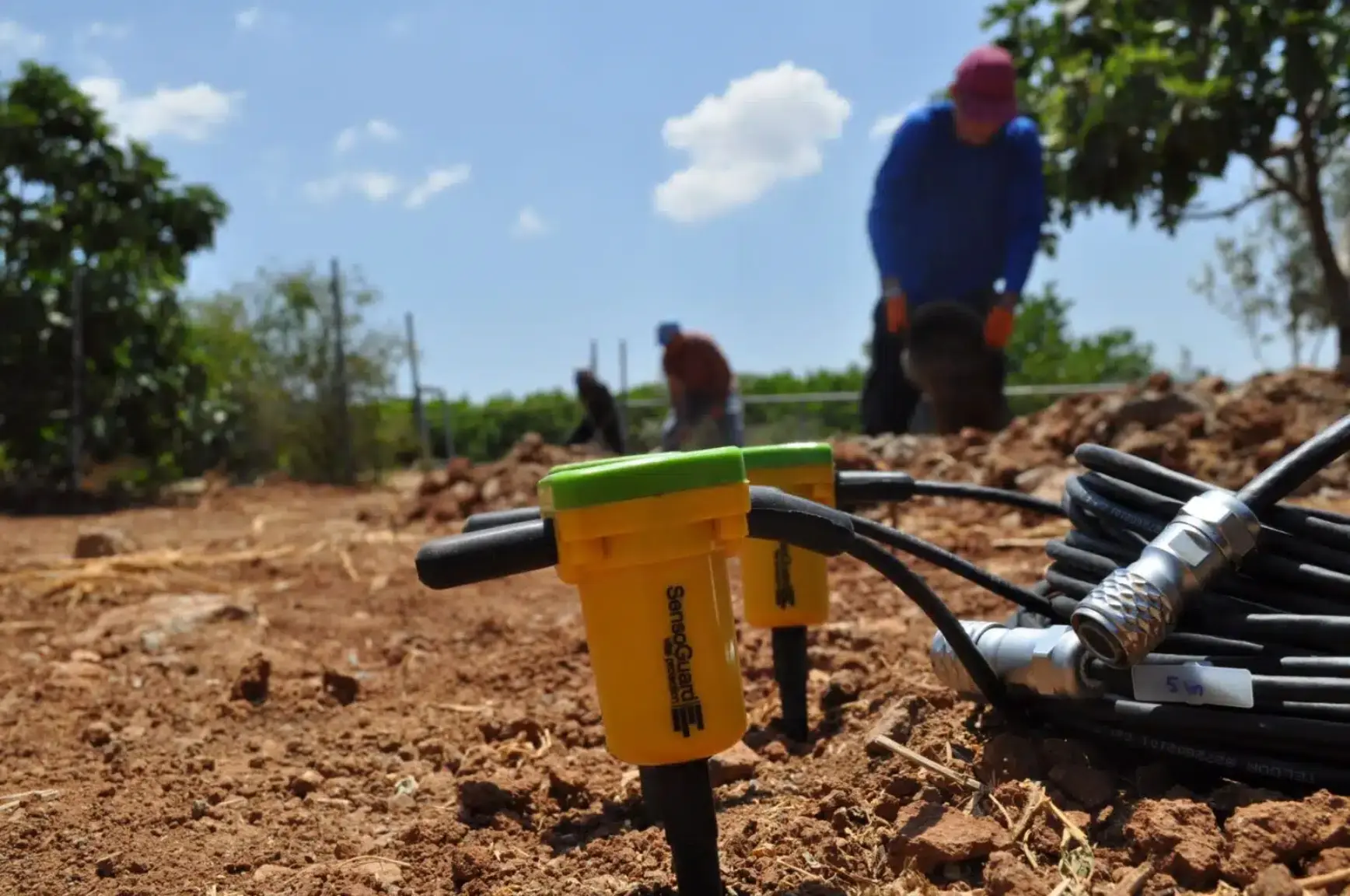
Security managers across industries rely on perimeter intrusion detection systems to protect facilities from outside intruders. In the commercial sector, these systems protect factories, oil & gas pipelines, and farms. In the military and homeland security space, they protect international borders, military bases, prisons, and other sensitive sites facing a constant threat of unauthorized entry.
There are several categories of perimeter intrusion detection technology: vibration fences, video analytics, radar systems, and buried intrusion detection. Security teams choose a buried system in three main cases:
- They need a discreet, possibly invisible, detection layer.
- They can't, or don't want to, build an above-ground physical fence, whether due to site limitations or a desire not to alter the landscape, since underground systems leave the terrain surface unchanged.
- They need to detect under-the-fence digging activity as well as surface movement.
Buried perimeter security can also work alongside above-ground measures. For example, seismic sensors buried along a fence line can automatically activate cameras or trigger alarms when they detect movement.
Buried Intrusion Detection Advantages
A buried seismic system is completely covert, requires no line of sight, resists tampering because there is no visible hardware to cut or bypass, and keeps performing through rain, wind, fog, and extreme temperatures that degrade camera- or radar-based systems. Installation depth is flexible, typically 30cm to 3m, without a performance penalty, unlike fiber optic or leaky coax cable alternatives that require burial accuracy within about 20–23cm to work reliably. Paired with camera-based verification, two-layer detection also reduces false alarms by over 90% compared to camera-only systems.
Who Uses Underground Detection Systems?
As the technology has matured, buried seismic security has become more accessible to private clients as well as government and defense customers. Typical applications include:
- Army bases, underground seismic detectors recognize any person or vehicle approaching the base perimeter, whether on foot, by car, or by digging.
- Private estates and mansions, because a buried system is completely covert and does not change the terrain, it provides security without altering the property's appearance. See our residential protection use case.
- Prisons, a number of high-profile jailbreaks have involved tunnels dug from inside or outside the perimeter. A buried system lets prison security teams identify digging activity anywhere along the fence line. Learn more in our prison protection use case.
- Remote infrastructure sites, as a hidden system, buried seismic sensors are ideal for remote sites, minimizing the risk of vandalism or cable cuts that commonly affect fence-mounted systems.
- Oil and gas pipelines, buried systems detect any attempt to damage pipes or tap into the product running through them, including digging activity near the line. See our pipeline protection use case.
SensoGuard's Seismic Shield Pro and Seismic Shield systems are built on this same buried seismic approach, giving critical infrastructure and residential sites a detection layer that is invisible, weatherproof, and virtually maintenance-free.
Relevant Products
- Seismic Shield Pro, buried perimeter protection for critical infrastructure
- Seismic Shield, residential buried perimeter security
- Critical infrastructure use cases
Frequently Asked Questions
How deep does a buried intrusion detection system need to be installed?
Installation depth is flexible, typically 30cm to 3m, without a performance penalty, which is one reason buried seismic systems are easier to install correctly than fiber optic or leaky coax alternatives that require precise burial depth.
Do buried systems produce more or fewer false alarms than fence-mounted sensors?
Fewer. Buried seismic detection is largely unaffected by wind, rain, and wildlife, common false-alarm sources for fence-mounted sensors, and paired with camera verification it reduces false alarms by over 90% compared to camera-only systems.
Can a buried system detect someone digging under a fence?
Yes. Because the sensors detect ground vibration rather than contact with a physical barrier, they identify digging activity the same way they identify footsteps or vehicle movement, which is why prisons and border sites use them specifically to catch tunnel attempts.