Pressure alarms and leak detection tell you the pipe is already open. Buried seismic sensors detect the excavation hours before that.
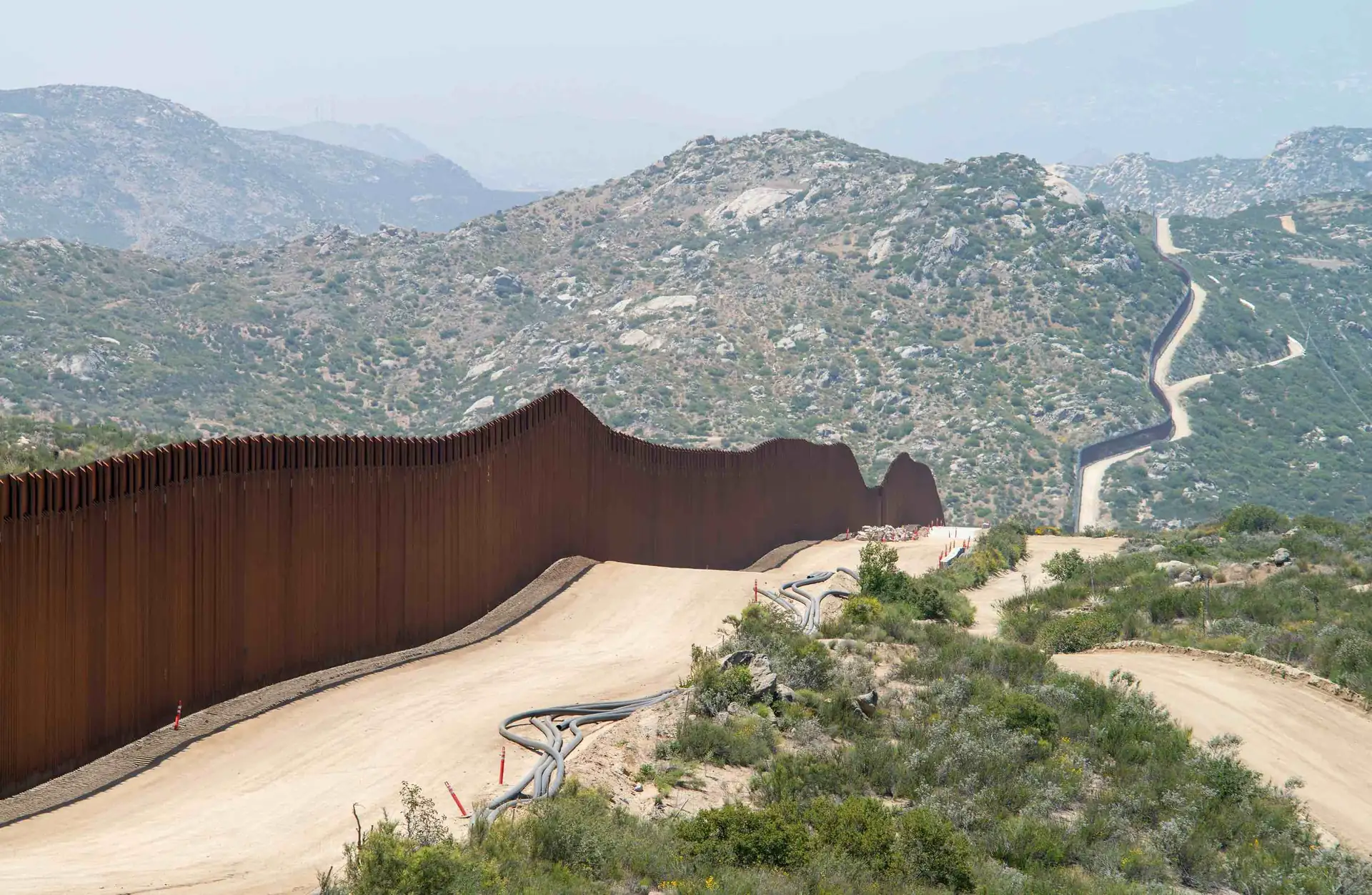
A buried pipeline has no perimeter. It has a route, often hundreds of kilometers of it, crossing farmland, scrub, road easements, and settlement edges where nobody is watching and nothing is fenced. The threat that matters most on that route is third-party interference: someone excavating over the line, whether a tapping crew or a contractor who has no idea the pipe is there.
Someone arrives at the right-of-way, usually by vehicle.
They dig down to the pipe, which takes hours.
They breach it.
Product starts to escape.
Most pipeline security spending detects step four. The whole argument for buried seismic detection is that steps one to three are noisy, take a long time, and are happening directly above a sensor.
Genuinely reliable, and every operator needs it. But a pressure anomaly is evidence the pipe is already open. It's a consequence detector, not an intrusion detector.
Excellent where you can put it. On a linear asset the economics collapse: cameras need poles, power, and comms, and can't see a person out of frame.
They detect cutting and climbing well on compounds and stations. A pipeline right-of-way has no fence for them to mount on.
Good for surveying condition and spotting an existing scar. It's periodic by nature, so a crew working between passes goes undetected.
The most serious alternative. A single interrogator reads one continuous fiber, covering tens of kilometers from one point, strongest when a fiber is already in the trench.
The trade-off isn't really about detection. Both seismic and fiber DAS hear an excavation. The difference shows up the first time something goes wrong, see below. For how these technologies compare more broadly, see our comprehensive comparison of perimeter security systems.
An operator doesn't buy a pipeline security system for the day it's commissioned. The question that decides the whole-life cost is this: when something breaks, how much of the system goes down, and who is qualified to fix it?
Its reach comes from one interrogator reading one unbroken optical path, which is exactly why a break is expensive. A single cut leaves everything beyond it dark. The repair means splicing the fiber, which changes the optical path, so the section has to be recalibrated by a specialist afterward. There's no partial deployment either, the layout has to be continuous across the whole run before any of it detects anything.
Each section runs on its own, so a fault is contained rather than propagated along the route. A cable cut disables at most 500m of line, because the Hub sits at the midpoint of each section and a break takes out one side of it. Maintenance is straightforward, calibration can be handled by local staff after short training, and no specialist is flown in to recalibrate after a repair.
Sensors sit 30 to 50cm below ground, either as a continuous sensor cable along the line or as discrete wireless units at chosen points. They listen to the ground itself, and each sensor classifies what it hears locally, reporting an event type rather than a raw waveform.
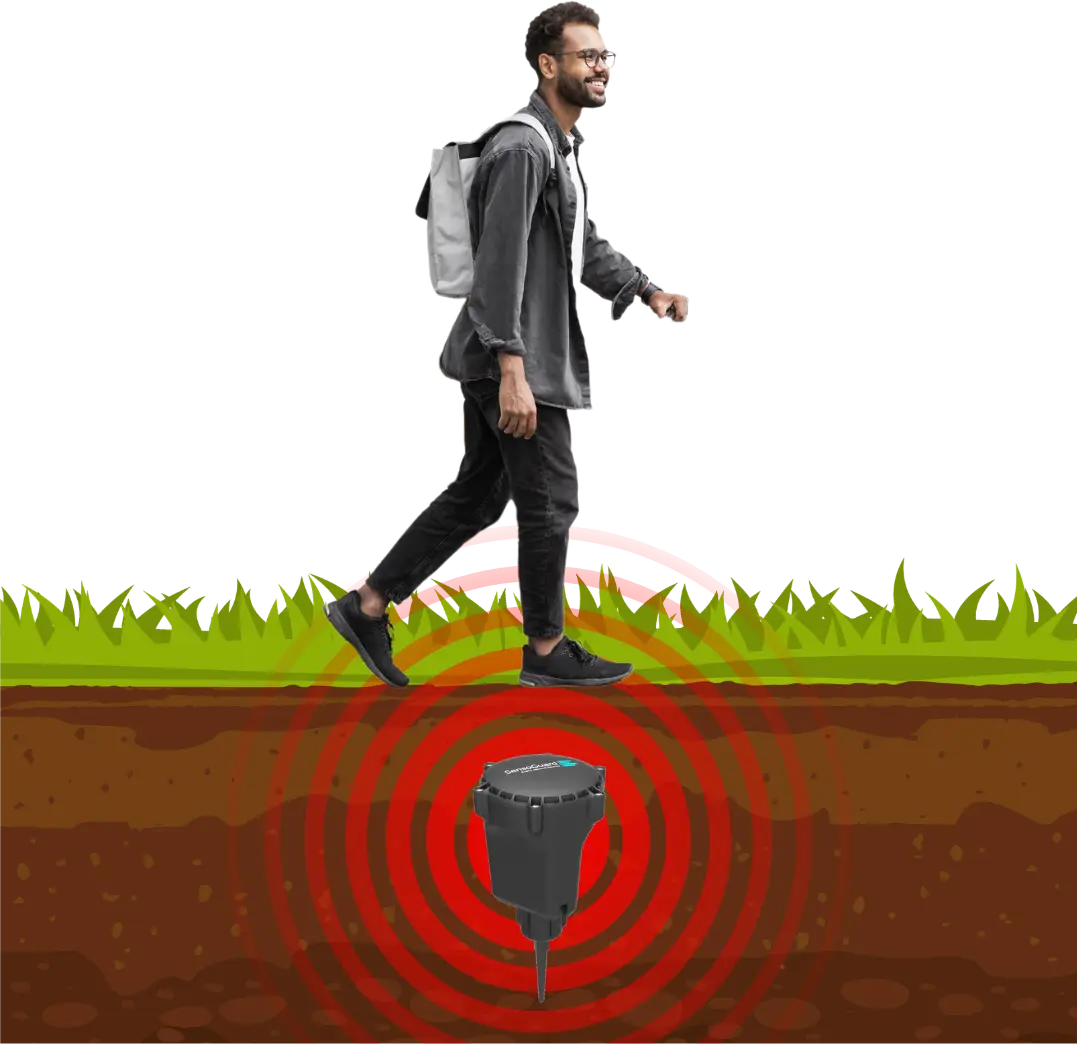
Digging is the loudest thing a person can do to the ground, sustained, repetitive, and mechanically distinctive, which makes it the easiest event class to detect and the hardest to fake accidentally.
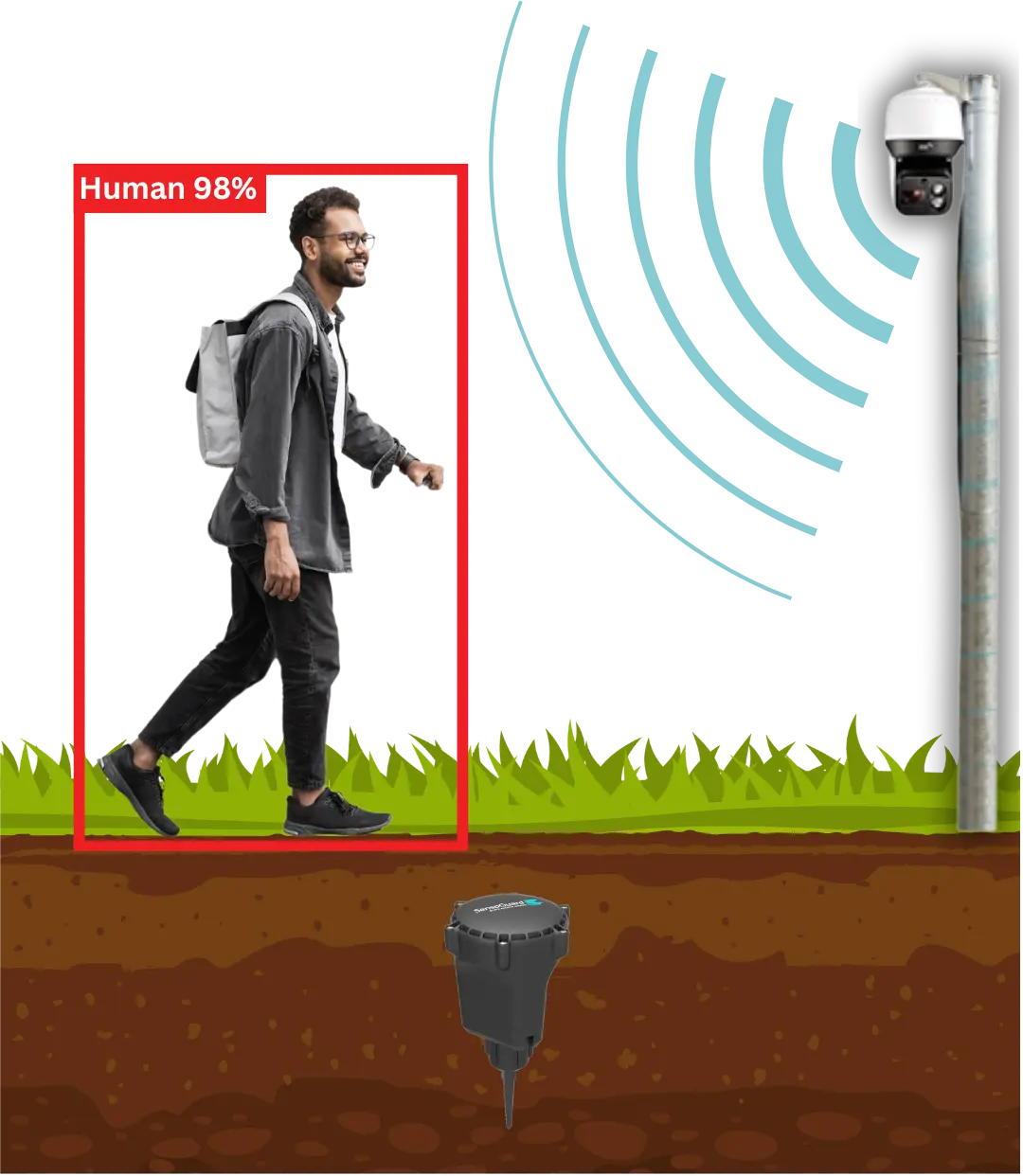
Each sensor decides footstep, vehicle, or digging on its own hardware, with per-sensor sensitivity and adaptive self-learning that calibrates to local ground noise.
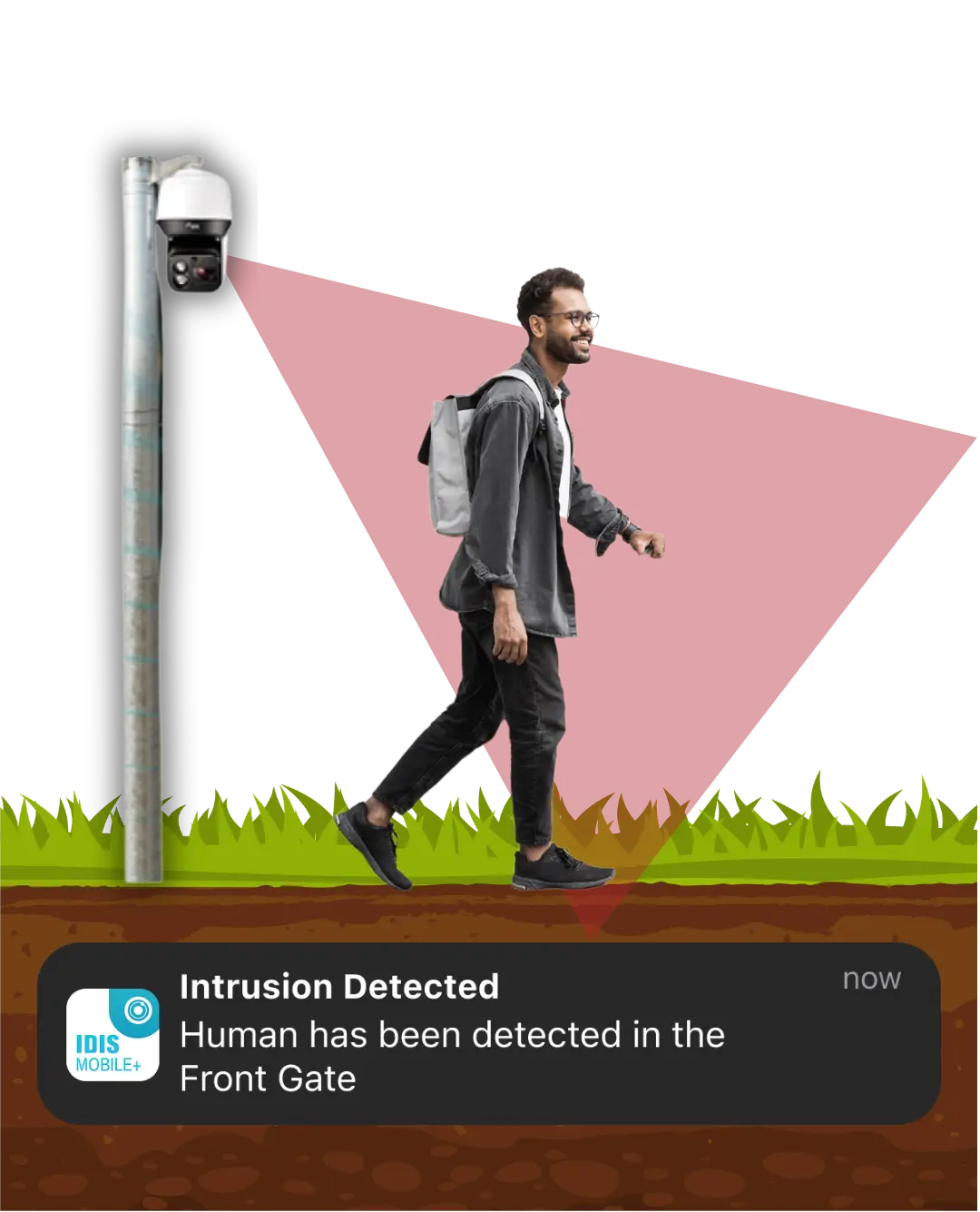
The Hub identifies which sensor fired and reports a located, classified alert to a control room, VMS, or field maintenance, over local network, cellular, or satellite.
Nothing is visible above ground. A crew surveying a site before returning with equipment sees an empty right-of-way, no camera to avoid, no housing to disable. And the system is deliberately configured for the threat that matters: a remote pipeline crosses shepherds, farmers, and walkers constantly, so it's spaced for continuous detection of digging (25m) rather than footsteps (12m). That's what keeps the system credible instead of ignored within a month.
The same 1km section works in either form, chosen by what the route allows rather than by what it costs.
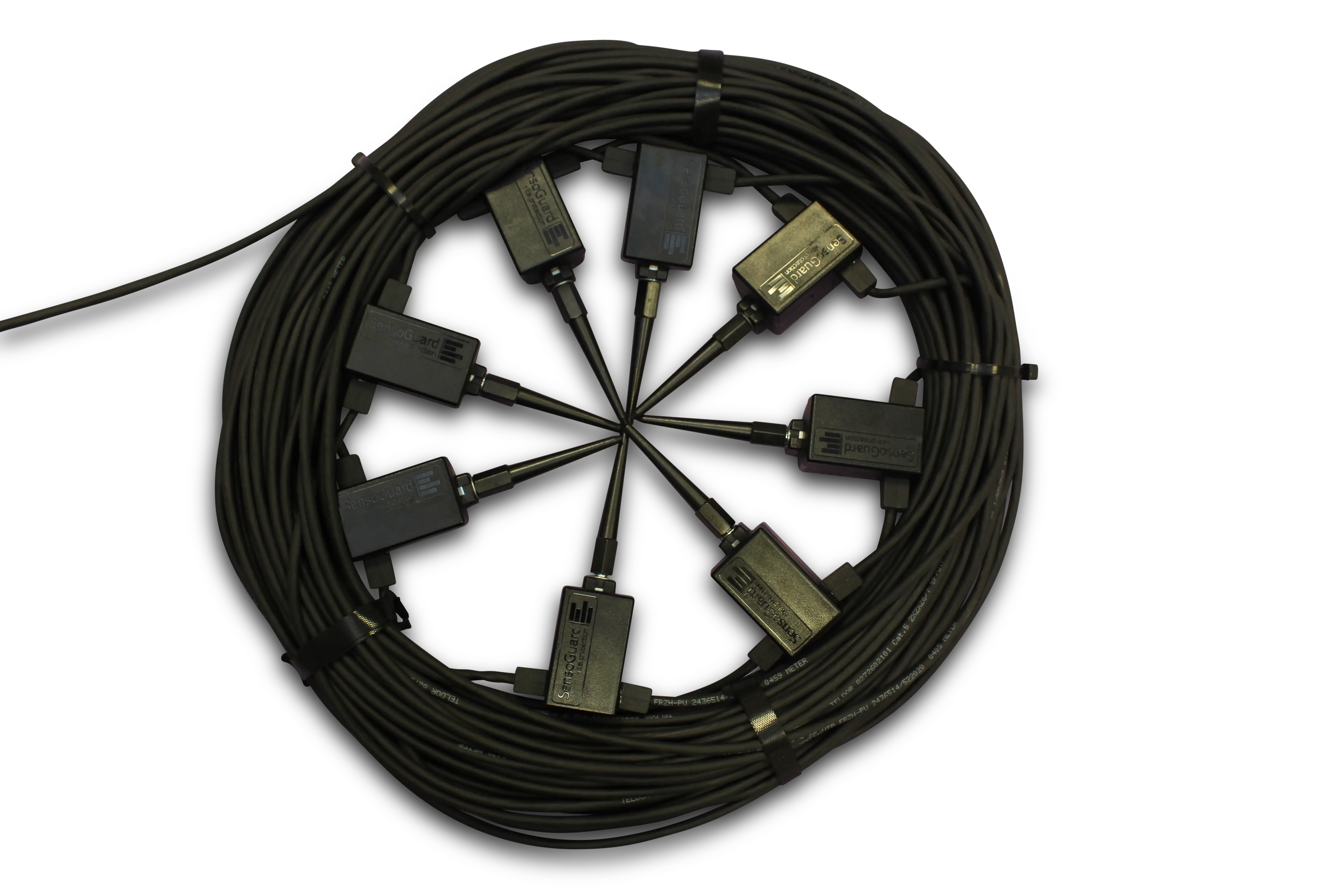
Built on SensoGuard's InvisiFence Plus architecture, about 32 sensors per kilometer, roughly 31m apart, buried along the line and reporting digitally to the Hub. The choice where the ground can be opened, or where a trench is already being dug.
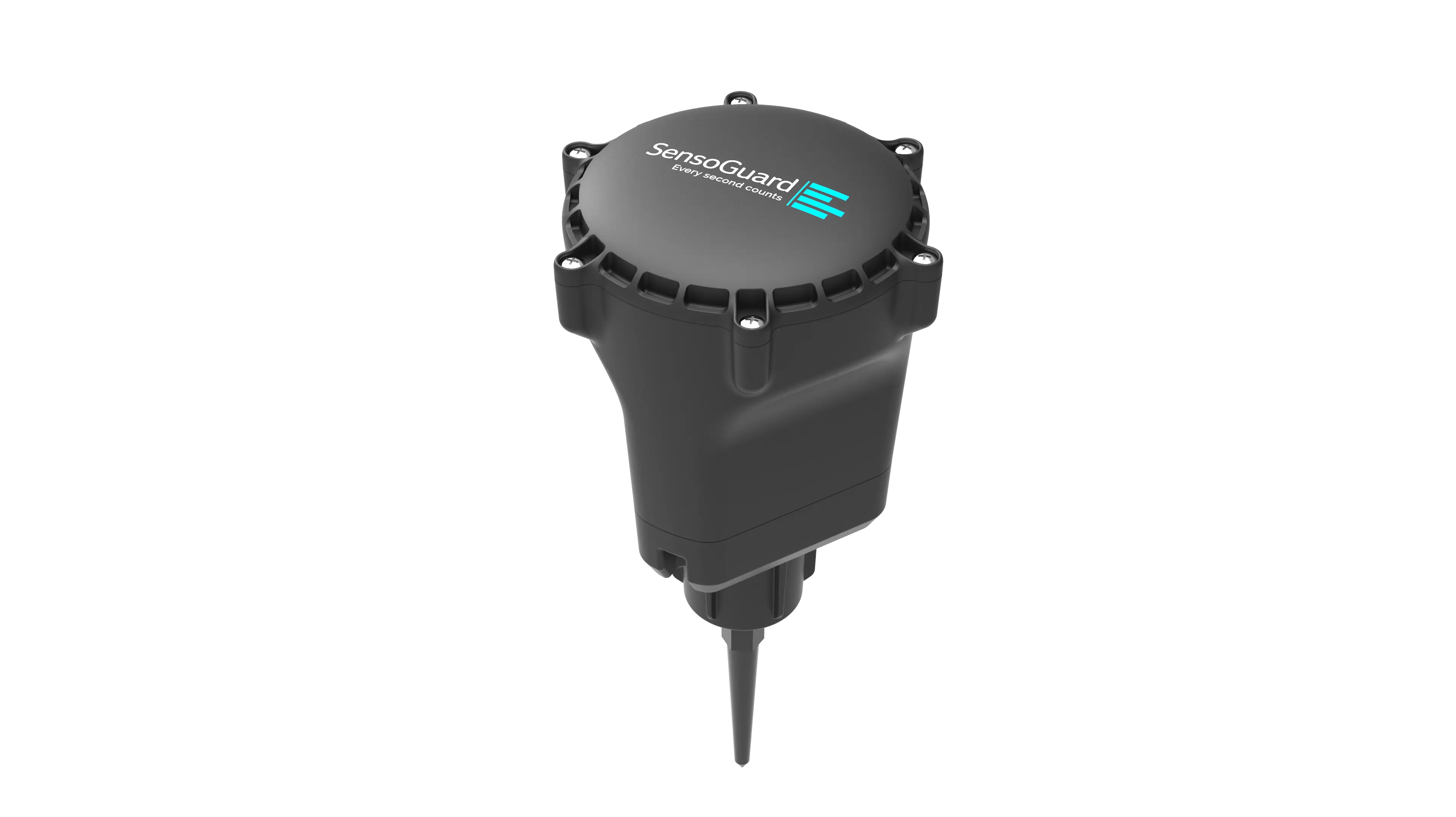
AIO XR sensors, part of the same sensor family used across SensoGuard's UGS wireless sensor line, no trenching, up to six years on field-replaceable cells. The choice on an existing route, across terrain that can't be trenched, or where a section has to go in quickly.
The Hub sits in the middle of each kilometer, transmitting alarms over cellular or satellite so a section on an empty right-of-way still reports. Command and control comes as CCS-OnSite for a continuous link to a control room, or CCS-Web for cloud management of multiple systems scattered across hundreds of kilometers.
Full specifications for both SG-PPS deployment options.
| Footsteps Detection | Up to 12m / 39ft radius |
| Vehicle Detection | Up to 25m / 82ft radius |
| Digging Detection | Up to 25m / 82ft radius |
| Localization | Per-sensor, via embedded DSP processor |
| Recommended Pipeline Spacing | About 32 sensors/km (~31m apart), spaced for digging detection rather than footsteps |
| Maximum Sensors | Up to 38 sensors per string |
| Bus Communication | RS485 |
| Section Length | 1km per Hub-managed section |
| Sections Supported | Unlimited, fully redundant |
| Maximum Loss Per Cable Cut | 500m (Hub sits at section midpoint) |
| Alarm Transmission | Local network, cellular, or satellite |
| IP Rating | IP68 (MIL-STD 810G) |
| Operating Temperature | -40°C to 85°C / -40°F to 185°F |
| Power Supply | 12V (9 to 20VDC) |
| Power Consumption | ~15mW (1.3mA @ 12V) |
| Dimensions (Sensor) | 131mm x 50mm x 42mm / 5.1″ x 1.96″ x 1.65″ |
| Dimensions (Spike) | 55mm / 2.16″ |
| Weight (Each Sensor) | 115g / 0.2lbs |
| Installation Depth | 30-50cm / 11.8″-19.6″ |
| Footsteps Detection | Up to 18m / 60ft radius |
| Vehicle Detection | Up to 35m / 115ft radius |
| Digging Detection | Up to 35m / 115ft radius |
| Detection Zone | 360° coverage |
| RF Frequency | 433MHz (Default), 868/915MHz (Optional) |
| Network Protocol | LoRa (Long Range) low-power wide-area network |
| Transmission Range (Antenna 2cm below ground) | Up to 250m / 820ft radius |
| Transmission Range (Antenna 5cm above ground) | Up to 1km / 3,280ft radius |
| Alarm Transmission | Local network, cellular, or satellite |
| IP Rating | IP68 (MIL-STD 810G) |
| Operating Temperature | -40°C to 85°C / -40°F to 185°F |
| Battery Life | Non-rechargeable, up to 6 years, field-replaceable D-size cells |
| Dimensions (Sensor) | 95mm x 70mm / 3.74″ x 2.7″ |
| Dimensions (Spike) | 75mm / 2.95″ |
| Weight | 500g / 1.1lbs |
| Installation Depth | 30-50cm / 11.8″-19.6″ |
The highest-value concentrated assets on the route, usually the only points with power and comms already in place. A conventional perimeter here is also a fit for Seismic Shield Pro.
Illegal tapping clusters where access is easy and the line is shallow. Historical incident data usually identifies these precisely, making them the cheapest places to get a result.
Points exposed to both third-party excavation and contractors working legitimately without accurate records of what's buried.
Where construction activity is constant, and distinguishing a legitimate excavation from an illegitimate one has operational value in itself.
A conventional perimeter, where the continuous buried line replaces a fence sensor that can't detect approach or dig-under.
Common questions from pipeline operators evaluating buried seismic detection.
Because the threat is different. A perimeter has to detect a person approaching on foot, so sensors sit about 6m apart. On a remote pipeline, the people crossing on foot are farmers, herders, and walkers, so the system is spaced for continuous detection of digging instead, which reaches 25m, at roughly 31m between sensors.
No, and neither can anything else. Both are excavation over the line and both should generate an alert. The value is learning about any excavation while it's happening, rather than discovering an unrecorded dig after it has damaged the pipe.
30 to 50cm. Ground conditions are a design input rather than a disqualifier: sensitivity is set per sensor, and adaptive self-learning calibrates each unit to the background noise where it sits.
They aren't ATEX or IECEx certified, and IP68 or MIL-STD 810G shouldn't be read as a substitute. In practice this is often not the obstacle it sounds like, since classified zones are defined around release sources and the sensors sit below ground. If a project requires certified equipment inside a classified zone, that needs establishing early.
Wireless AIO XR sensors run up to six years on field-replaceable cells and report over LoRa to a receiver. Output can be over the local network, cellular, or satellite, so a site with no infrastructure at all can still report.
No, and this is usually the deciding factor. Each 1km section is independent, so an operator can protect the highest-exposure stretches first and extend in later budget years. A continuous fiber system doesn't work that way, the run has to be complete before any of it detects.
A cut disables at most 500m of line, since the Hub sits at the midpoint of each 1km section and the break is contained to one side of it. Repairs are done by local staff after short training, with no recalibration needed afterward.
Around one per sensor per two weeks, against a 98% probability of detection. Classification at the sensor is what keeps that ratio workable, the unit decides footstep, vehicle, or digging before anything is transmitted.
Pipeline Protection Plus: independent 1km sections of buried seismic detection, wired or wireless, that catch excavation hours before a breach and keep working when a cable is cut.
Learn morePipeline security doesn't need to cover every kilometer to be worth deploying, it needs to cover the places incidents actually occur. Get a custom quote and see how SG-PPS protects oil and gas pipelines.