
Seismic Shield: Home Perimeter Security System
Invisible Security for Your Home Perimeter
Home Perimeter Security System
Detect intruders before they reach your property using underground seismic sensors.
99% Accuracy — Patent-Protected Two-Layer Detection
“Security You Never See.
Protection You Always Have.”
Detect footsteps before intruders reach your home using underground seismic sensors hidden beneath your landscape.
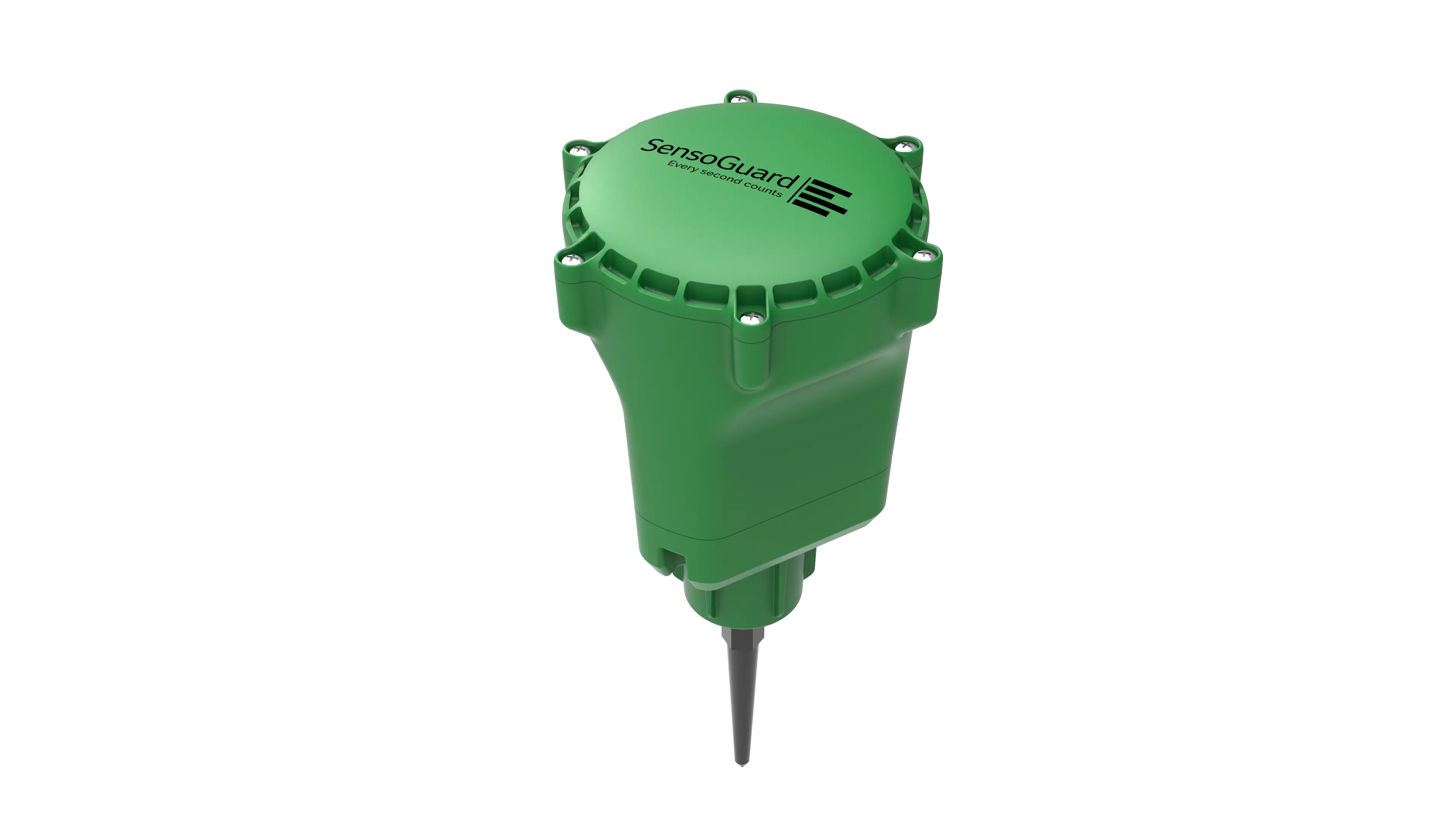
What Is a Home Perimeter Security System?
A home perimeter security system detects intruders at the edge of your property, before they reach a door or window, rather than after they're already inside.
Most residential systems fall into a few categories: fence-mounted sensors that detect vibration or cutting on an existing fence, infrared or microwave beams that trigger when a line of sight is broken, camera-only systems that rely on video motion detection, and underground seismic sensors like Seismic Shield that detect footsteps and vehicle movement through the ground itself. These fall under what's known as a perimeter intrusion detection system (PIDS), and each type has different tradeoffs in visibility, weather sensitivity, and false-alarm rate — see the full comparison below.
See Seismic Shield in Action
Watch how underground seismic sensors detect intrusions before they ever reach your home.
From Detection to Response in Seconds
How underground sensors, AI verification, and instant alerts keep you a step ahead.
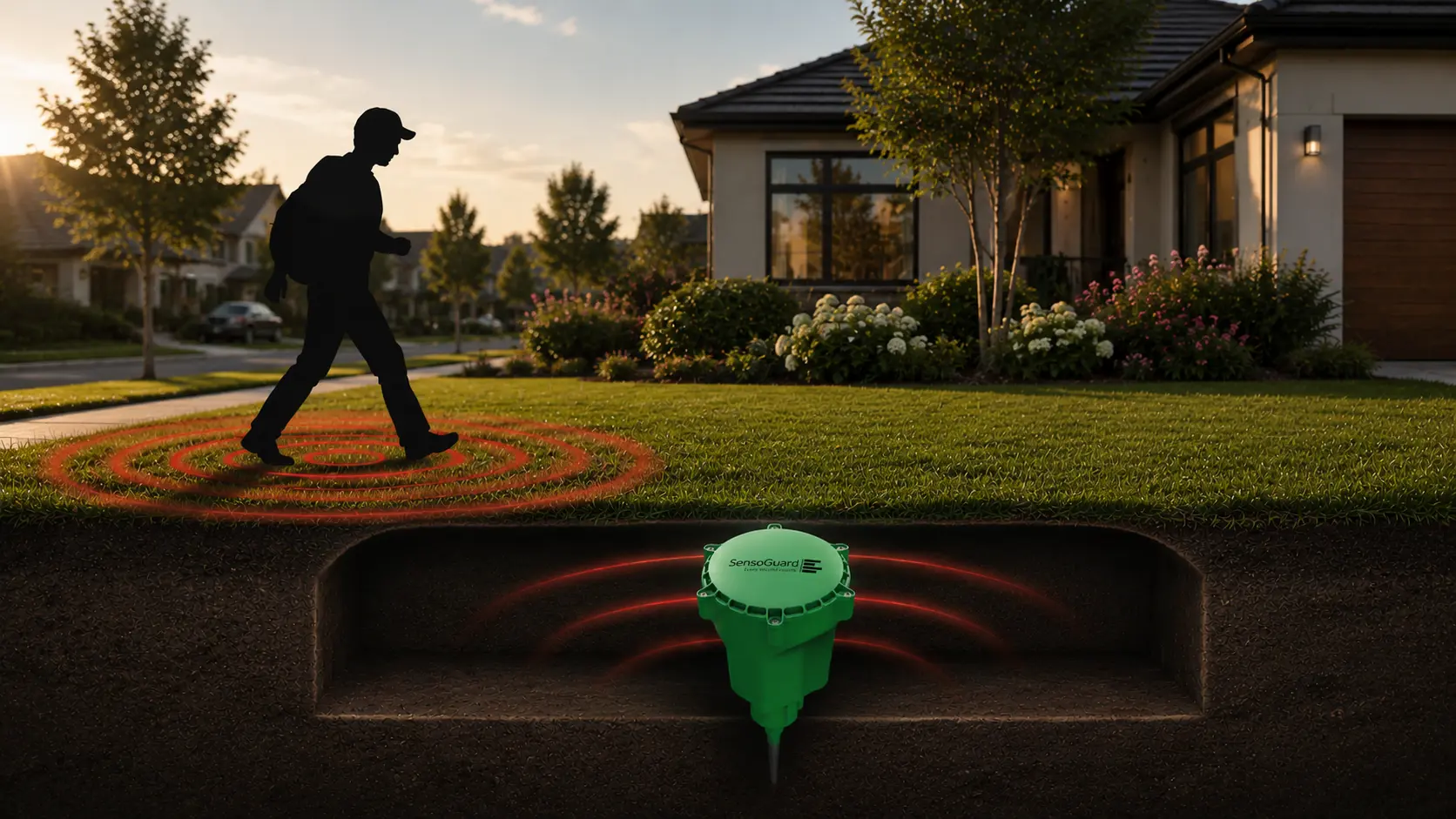
Detect
Underground seismic sensors pick up footsteps or vehicle movement the instant someone crosses your property line, long before they reach a door or window.
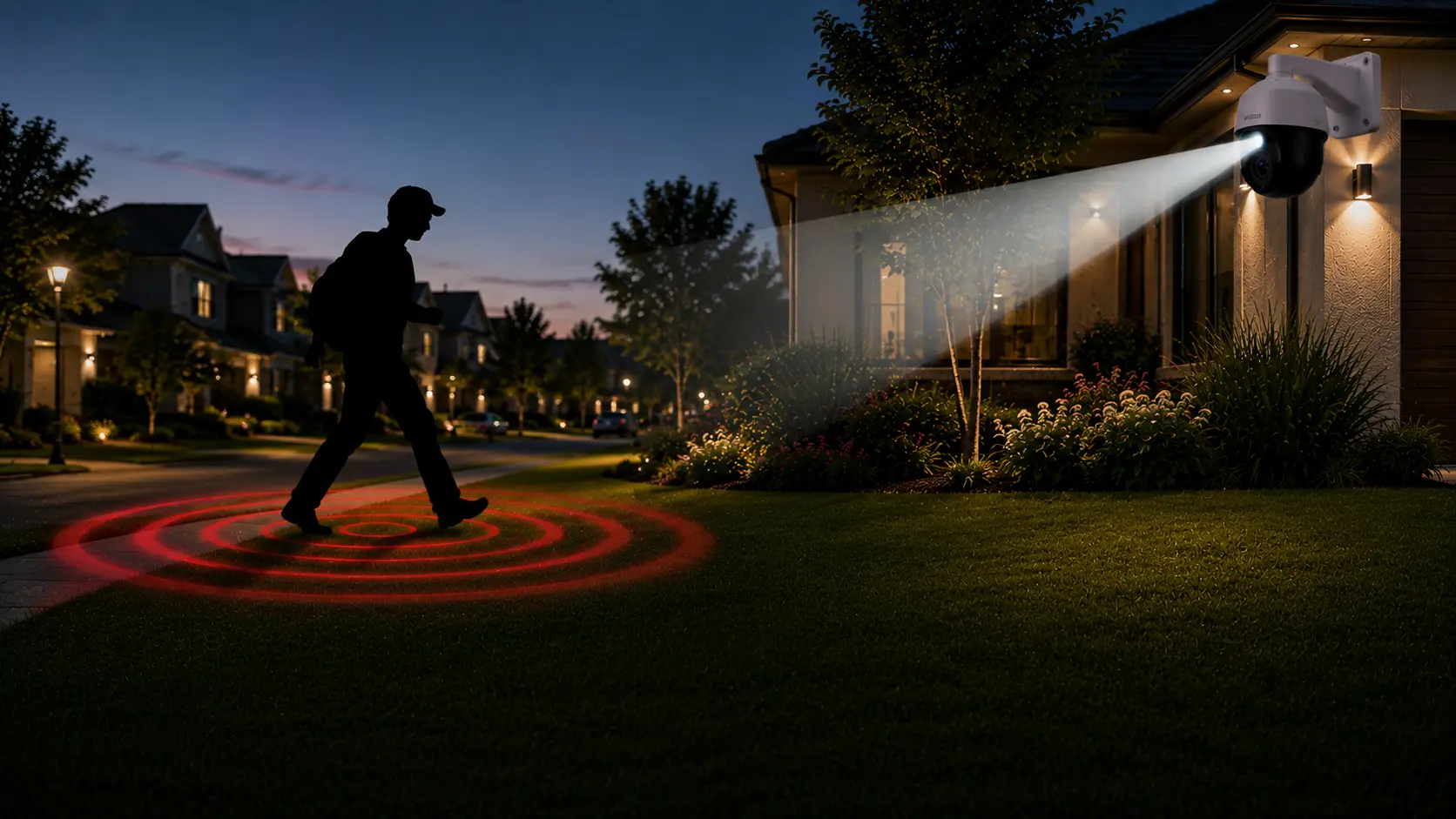
Verify
AI-powered analysis instantly classifies the disturbance, filtering out wind, animals, and passing traffic so your team only sees real threats.
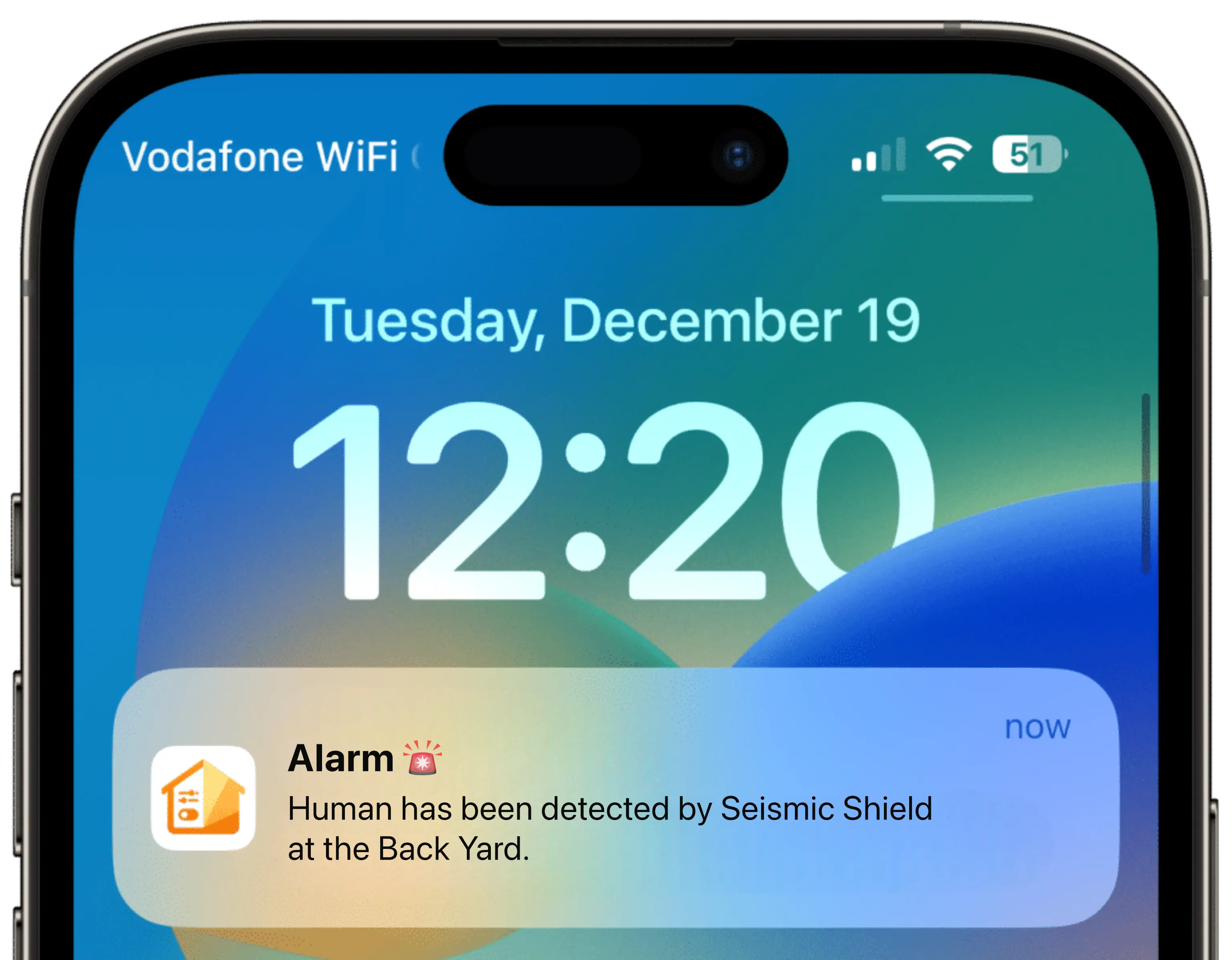
Alert
Verified alerts reach your phone or security team in real time, with the exact location on your property, so you can act immediately.
Patented Two-Layer Protection
Only Seismic Shield combines buried seismic detection with intelligent video verification to reduce false alarms while providing early warning.
“Reduces false alarms by over 90% compared to camera-only systems.”
Works With Your Existing Cameras
Seismic Shield integrates with the security cameras and NVRs you already have installed, no need to replace your existing system.

IDIS

Hikvision

Dahua

ProVision

Uniview
Connects to Your Alarm System
Seismic Shield integrates directly with your existing alarm panel, no new wiring or replacement hardware required. 18 dry contact outputs let you wire each zone independently for flexible, verified alerts alongside your current security setup.
Invisible Installation
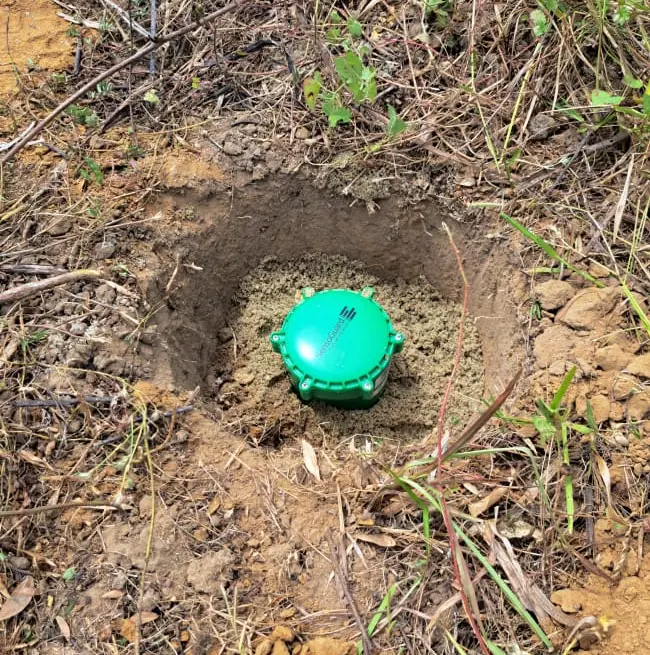
Sensors are fully buried and leave no visible trace above ground
Wireless or Wired Options
Choose the installation method that fits your property
Preserves Landscape Design
Your lawn, garden, and hardscaping stay exactly as designed
How to Choose the Right System for Your Property
A few questions determine which setup fits best.
Property Size & Terrain
Smaller or irregular perimeters suit standalone wireless sensors; long, continuous boundaries are better served by a single buried sensor cable.
Installation Preference
Wireless sensors install in hours with no trenching. A wired sensor cable takes longer to install but covers the full boundary in one continuous run.
Existing Equipment
Already have cameras or an alarm panel? Seismic Shield connects to what you have instead of requiring a full system replacement.
Protecting a large estate or a commercial-scale perimeter? Seismic Shield Pro extends the same two-layer detection to larger properties.
Choose The System That Fits Your Property
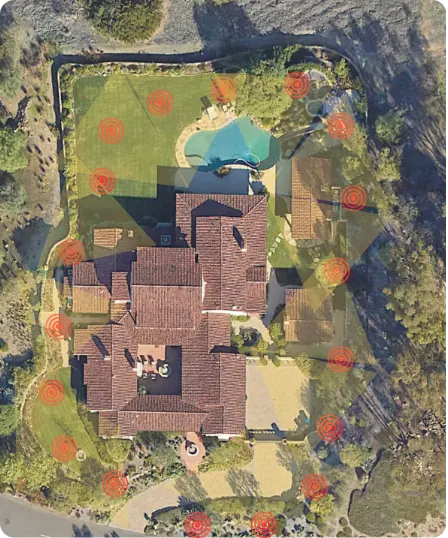
Wireless
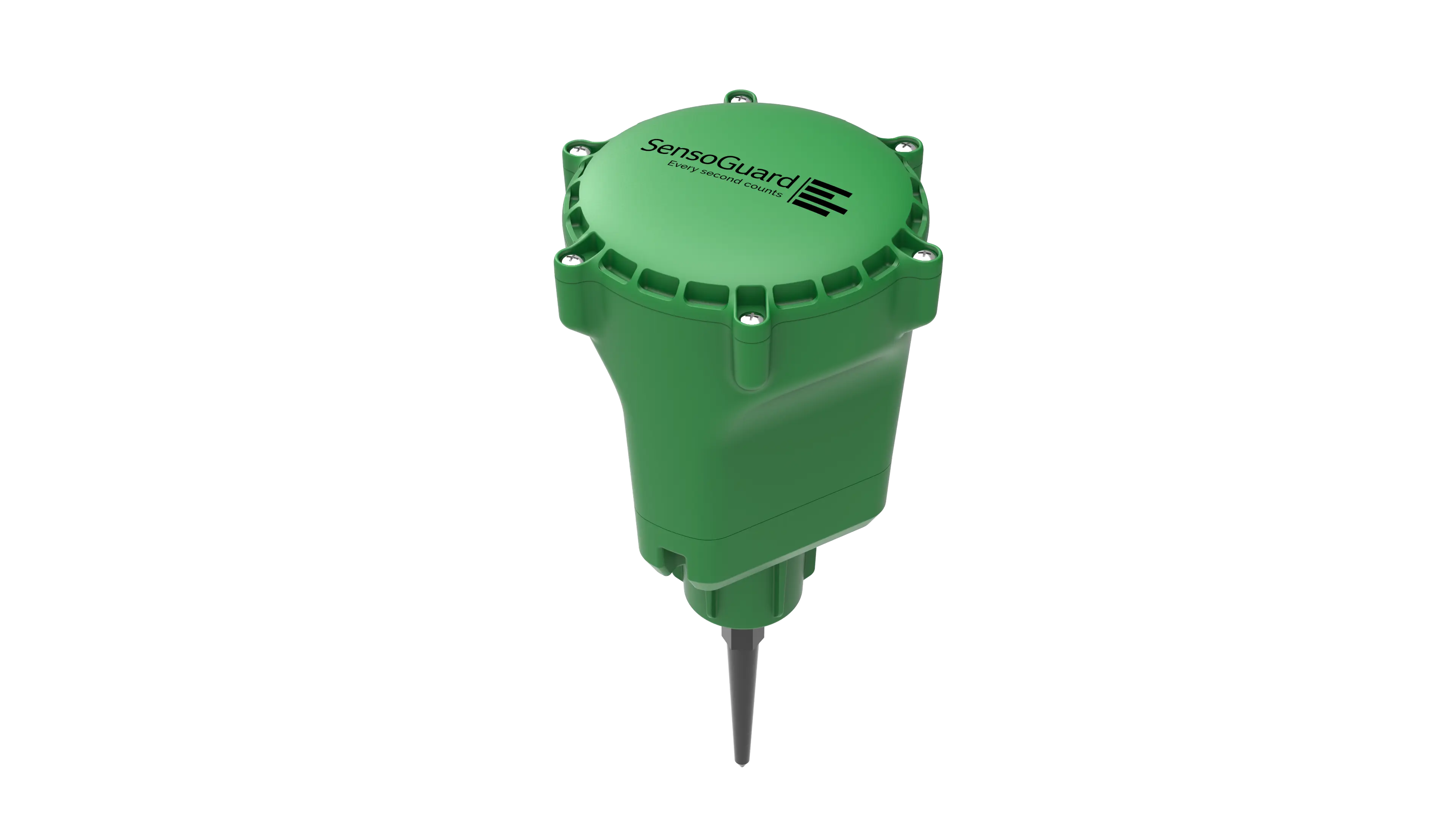
Quick installation with no trenching required. Standalone battery-powered sensors are ideal for adding protection to an existing property without disrupting your landscape.
| Sensor | AIO X |
| Detection Range | Footsteps: 50 m² (538 sq ft) detection area; vehicle & digging: 220 m² (2,368 sq ft) detection area |
| Detection Zone | 360° coverage |
| Transmission Range | Up to 250m/820ft radius (antenna 2cm below ground) |
| IP Rating | IP68 (MIL-STD 810G) |
| Operating Temperature | -40°C to 85°C / -40°F to 185°F |
| Battery | Non-rechargeable, 6 years |
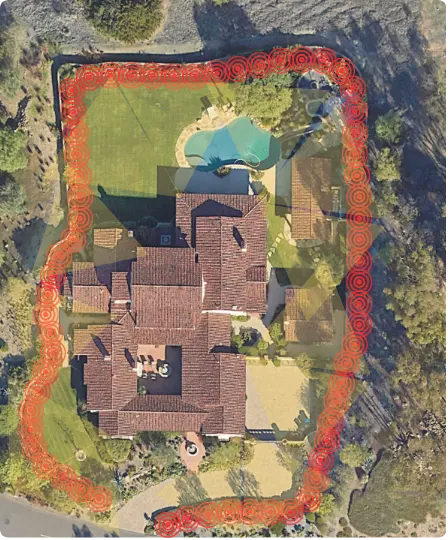
Wired
A continuous buried sensor cable delivers maximum perimeter coverage for permanent installations, the same sensor cable technology used in InvisiFence Plus for commercial and government sites. Built for large properties that need consistent detection across the full boundary.
| Sensor | Sensor Cable |
| Detection Range | Footsteps up to 12m/39ft radius; vehicle & digging up to 25m/82ft radius |
| Virtual Fence Width | 6m (adjustable via sensitivity) |
| Bus Communication | RS485 |
| IP Rating | IP68 (MIL-STD 810G) |
| Power | 12V (9 to 20VDC), ~15mW (1.3mA @ 12V) |
Both layouts run through the same patented two-layer verification, which reduces false alarms by over 90% compared to camera-only systems.
Why Underground Seismic Outperforms the Alternatives
Three technologies dominate perimeter protection today: underground seismic detection, fence-mounted sensors, and infrared (IR) beams. Here's how they compare.
| Criteria | Underground Seismic Detection | Fence-Mounted Sensors | IR Beams |
|---|---|---|---|
| Visibility to intruders | Fully concealed, no visible hardware | Visible on the fence line | Visible posts and beam path |
| Requires an existing fence | No | Yes | No, but needs clear line of sight |
| Weather resistance | Unaffected by rain, wind, or fog | Sensitive to wind-driven fence vibration | Degraded by fog, heavy rain, or snow |
| False alarm sources | Minimal, filtered by adaptive algorithms | Wind, animals, debris hitting the fence | Birds, foliage, dust, and beam misalignment |
| Yard aesthetics | Nothing visible, landscape stays untouched | Alters the property's fence line | Requires posts across the yard |
| Defeat resistance | No wires to cut or panels to bypass | Can be bridged or climbed between sensors | Can potentially be crawled under or jumped over |
| Maintenance | Low, buried and self-contained | Moderate, tied to fence condition | Moderate, requires beam alignment checks |
Underground seismic detection is the only one of the three that requires no visible hardware and no existing fence to protect a property. Read the full comparison →
The Residential Security Handbook
A complete guide to modern home perimeter security: how indoor and outdoor systems compare, why traditional alarms and cameras fall short, and how underground seismic detection solves the false-alarm and coverage problems that come with protecting a high-end residential property.
Download Free HandbookDesign Your Site in Minutes
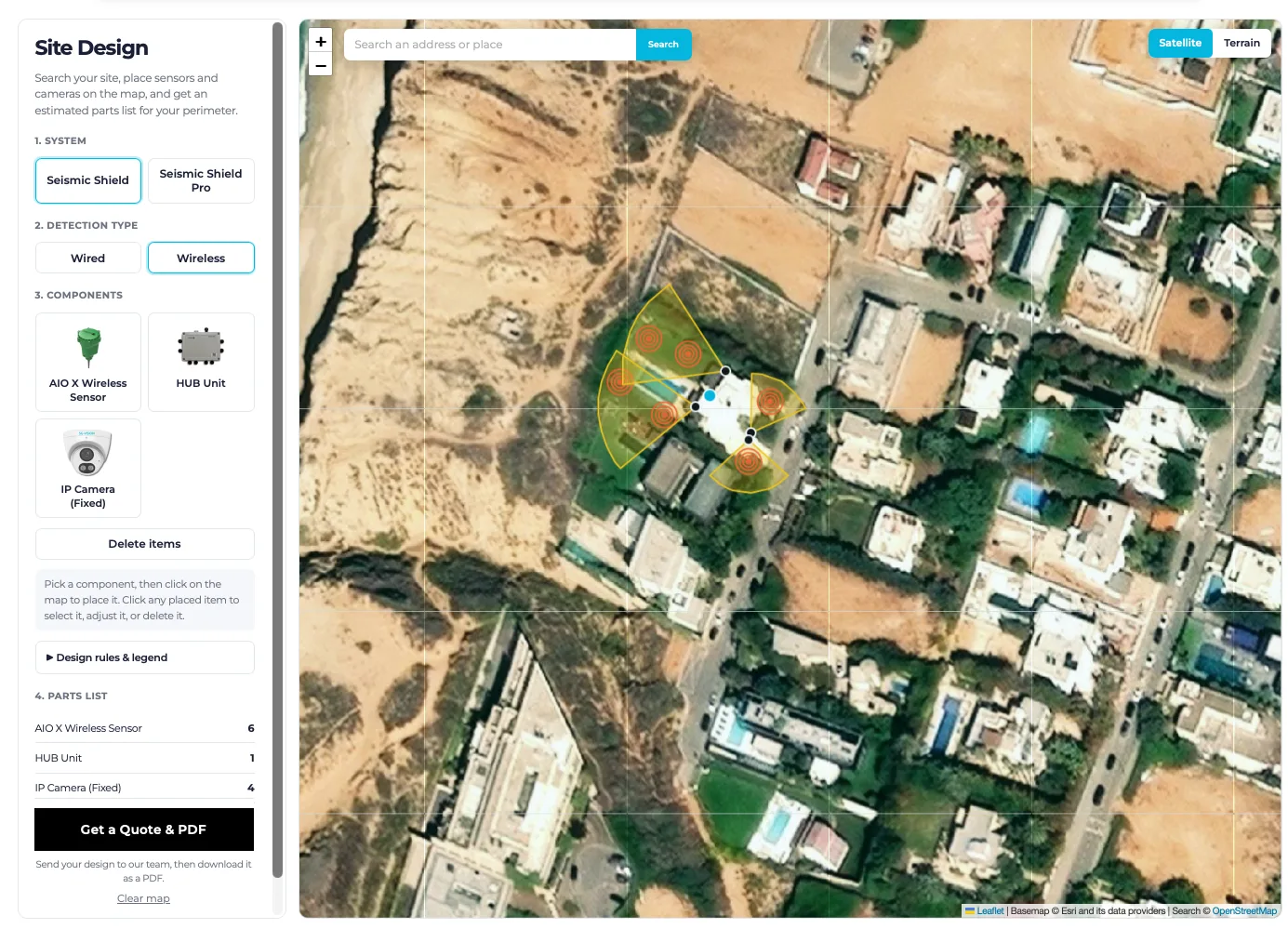
Search your address, place Seismic Shield sensors and cameras on a satellite map, and get an estimated parts list for your perimeter.
- Find your siteSearch any address and switch between satellite and terrain views.
- Lay out the systemDraw sensor cable runs or place wireless sensors, HUB Units and cameras.
- Get your parts listSend it to us for a quote and download it as a PDF.
Ready to Protect Your Home?
Get a free consultation and a custom quote from our security experts
Frequently Asked Questions
Have questions about Seismic Shield? Browse through our frequently asked questions to learn more about detection, installation, compatibility, and performance to make the most of your home security system.
How deep do the sensors need to be buried?
Typically between 30–50cm, though the seismic sensors keep working reliably anywhere from 30cm to 3m deep, so exact depth isn't critical to performance.
Will installation damage my garden or landscaping?
No. Installation only requires a narrow trench along the sensor path, and the area is restored once the sensors are buried, your lawn and landscaping stay intact.
Does Seismic Shield work with my existing alarm system?
Yes. Seismic Shield connects to any standard security alarm panel or CCTV system through a simple dry contact output.
What's the difference between the wireless and wired options?
The wireless system uses standalone battery-powered sensors with no trenching, ideal for existing properties. The wired option uses a continuous buried sensor cable for maximum coverage across larger perimeters.
Does weather affect detection accuracy?
No. Seismic Shield detects underground vibration, not surface movement, so rain, wind, and snow don't trigger false alarms the way above-ground sensors can.
What is a home perimeter security system?
A home perimeter security system detects intruders at the edge of your property, before they reach a door or window. Common types include fence-mounted sensors, infrared beams, camera-only systems, and underground seismic sensors like Seismic Shield.
How is underground seismic detection different from a fence-mounted or camera-only system?
Underground seismic sensors are fully concealed and don't require an existing fence or line of sight, unlike fence-mounted sensors or camera-only systems. They're also unaffected by wind, fog, or wildlife, which are common sources of false alarms for above-ground systems. See the full comparison.