
The Evolution of Perimeter Security
Protecting facilities and critical infrastructure has always been a challenge for security professionals. Traditionally, perimeter security has relied on visible deterrents such as fences, cameras, and lighting systems, but modern threats are more sophisticated: criminals and organized groups often study visible security systems, identify weaknesses, and exploit them to bypass detection.
This has led many organizations to adopt a different strategy, invisible security systems that detect intruders without revealing how or where detection occurs. Invisible security technologies, such as seismic intrusion detection systems, provide a hidden layer of protection that is significantly more difficult for intruders to identify or defeat.
Key Takeaways
Invisible seismic systems protect the entire ground area around a perimeter, not just the fence line, detecting intruders who dig under or jump over a fence entirely. Because sensors are buried, they are difficult to locate, access, or sabotage, unlike visible cameras and fence-mounted cables that reveal their own coverage.
The Weakness of Visible Security Systems
Traditional security infrastructure is typically easy to identify. Cameras, fences, and sensors are often clearly visible along the perimeter, and while that visibility can act as a deterrent, it also hands potential intruders valuable information.
Predictable Detection Points
Visible security systems reveal exactly where detection is expected to occur: cameras show their field of view, fence sensors indicate where detection cables are mounted, and motion detectors reveal their coverage area. Once an intruder understands the location of detection devices, they may attempt to avoid, disable, or bypass them.
Physical Tampering
Visible systems can also be physically targeted. Intruders may cut sensor cables, damage cameras, cover lenses, or tamper with equipment mounted on fences, and in remote locations, these actions may go unnoticed until after the intrusion has occurred.
Security Through Visibility vs Security Through Detection
Traditional perimeter security often relies on visible deterrence, but deterrence alone does not guarantee detection. Intruders who are determined or experienced may view visible security devices as obstacles to be studied and overcome rather than as effective barriers, which is why invisible detection systems shift the focus from deterrence to reliable detection.
What Is Invisible Perimeter Security?
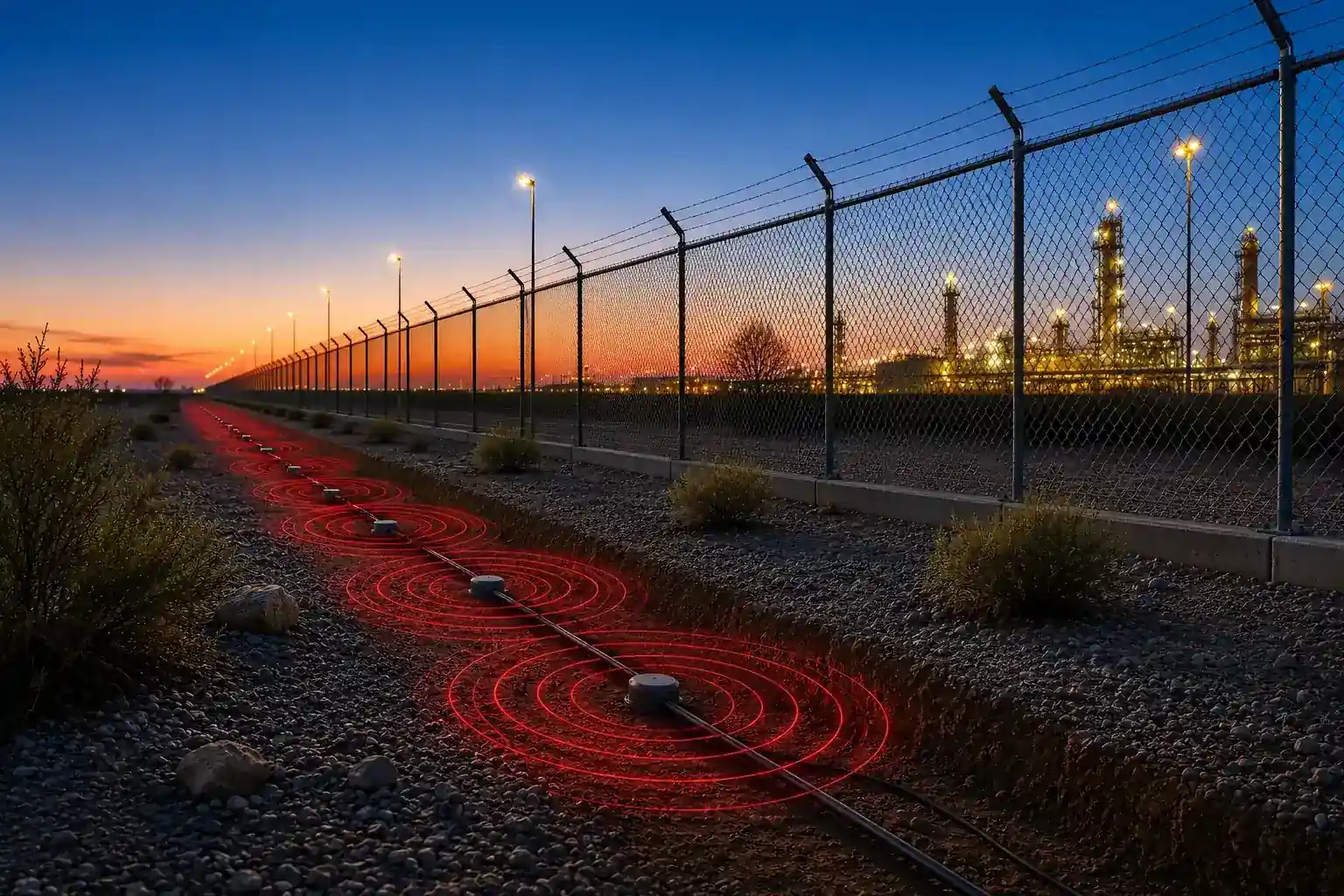
Invisible perimeter security systems are designed so that intruders cannot see, identify, or easily understand the detection technology protecting the site. Instead of relying on visible sensors or fence-mounted devices, these systems use underground seismic sensors, buried detection cables, and covert sensor networks.
Because these systems are hidden underground, intruders cannot easily determine where the sensors are located, how detection occurs, or how to bypass the system, and that uncertainty significantly increases the difficulty of bypassing the perimeter.
Seismic Detection: Invisible Security in Action
One of the most effective invisible security technologies is seismic perimeter intrusion detection. Seismic systems use buried sensors that detect ground vibrations caused by human activity, monitoring vibration patterns generated by footsteps, vehicles, digging activity, and heavy equipment movement. When these vibrations match known intrusion patterns, the system generates an alert and identifies the location of the activity, and because the sensors are installed underground, the detection infrastructure remains completely hidden from view.
Area Protection vs Fence Protection
Another major advantage of invisible seismic systems is that they provide area protection rather than fence protection. Traditional fence-mounted sensors monitor the fence structure itself, typically detecting fence cutting, fence climbing, or vibrations on the fence, but these systems may fail to detect intruders who jump over the fence without touching it, dig under the fence, or approach the perimeter before attempting entry.
Invisible seismic systems protect the ground area surrounding the perimeter instead of just the fence. Systems such as InvisiFence Plus create a detection zone approximately 6 meters wide and up to 25 meters deep along the perimeter, wide enough to detect people approaching the perimeter, individuals walking along the fence line, and attempts to dig under or jump over the fence. By protecting the entire perimeter area, the system prevents intruders from bypassing detection simply by avoiding contact with the fence.
Reduced Vulnerability to Sabotage
Invisible security systems also offer stronger protection against sabotage. Because the sensors are buried underground, they are difficult to locate, access, or damage, unlike visible fence sensors or camera cables. This makes them particularly valuable for protecting remote or critical infrastructure sites.
Integration with Intelligent Surveillance
While invisible sensors provide early detection, security teams often need visual confirmation of alarms. Modern perimeter security systems combine invisible detection with intelligent surveillance technologies. Seismic detection systems, for example, can be integrated with AI-enabled PTZ cameras, so when an intrusion is detected, the camera automatically moves to the location of the event and begins tracking the intruder. This combination of covert detection and intelligent visual verification creates a powerful layered security architecture.
Where Invisible Security Systems Are Most Effective
Invisible perimeter security technologies are particularly valuable in environments where intruders may attempt to study or bypass traditional systems, including solar farms, airports, data centers, military installations, oil and gas facilities, remote industrial sites, and critical infrastructure. In these environments, hidden detection systems provide greater resilience against sophisticated intrusion attempts.
The Future of Perimeter Security
As security threats become more advanced, organizations are increasingly adopting covert detection technologies as part of their perimeter protection strategy. Invisible systems such as seismic intrusion detection provide hidden detection infrastructure, early detection before a perimeter breach, reduced vulnerability to sabotage, and improved reliability for large outdoor sites. By combining invisible sensors with intelligent verification technologies, security professionals can build perimeter security systems that are significantly harder to bypass.
Frequently Asked Questions
What is invisible perimeter security?
Invisible perimeter security uses hidden sensors, such as buried seismic sensors, to detect intruders without revealing the detection technology along the perimeter.
Why are invisible security systems harder to bypass?
Because the sensors are hidden underground, intruders cannot easily locate or understand the detection system, making it much harder to avoid or sabotage.
What technologies are used in invisible security systems?
Common technologies include seismic sensors, buried intrusion detection cables, and covert sensor networks.
Where are invisible security systems used?
They are commonly used to protect critical infrastructure such as solar farms, airports, military facilities, and remote industrial sites.