
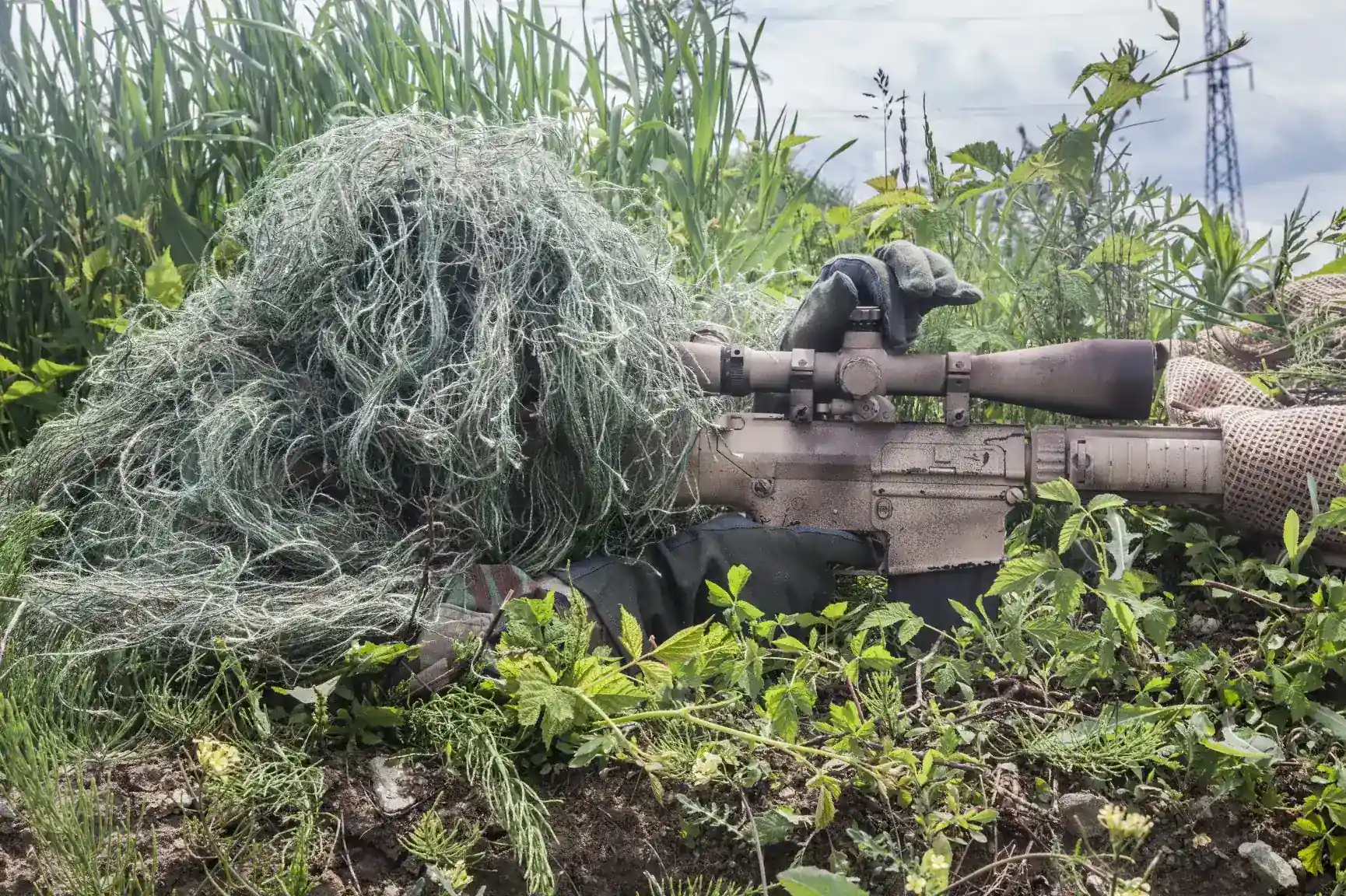
Military and law enforcement teams often need to secure a perimeter with no warning and no existing infrastructure. The MOSS Kit is built for that gap. It's a rapid-deployment seismic sensor kit, and a two-person team can set it up in under 5 minutes, with no trenching or cabling, for military and law enforcement agencies.
Key Takeaways
- Deploys in under 5 minutes, no trenching or cabling, two-person team.
- AIO 2 detects footsteps up to 18m and vehicles or digging up to 35m, 360°.
- 4 swappable sensor types cover open ground, indoor motion, and gate monitoring.
- Rated IP67/68 and MIL-STD-810G, operating from -40°C to 85°C.
How Fast Can You Deploy the MOSS Kit?
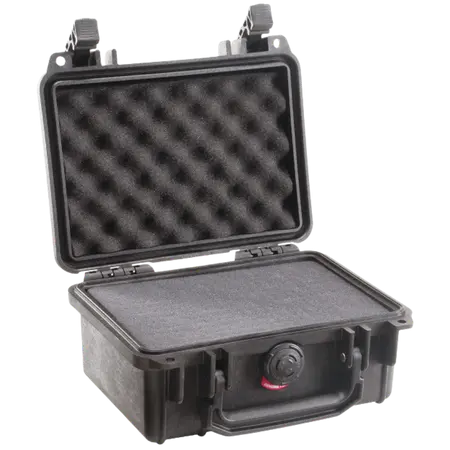
Setup speed has traditionally limited how fast advanced security systems can go live. The MOSS Kit skips that delay: sensors deploy in under 5 minutes with no trenching or cabling, and a two-person team can be operational on arrival. The kit's five sensor slots are modular. They can be filled with AIO 2 seismic sensors for open ground, TACT-PIR for indoor motion, or TACT-RADAR for wider-angle coverage. MINI-VIB is available for gates and containers, depending on the mission.
What Can the MOSS Sensor Lineup Detect?
Unattended ground sensors are an established category in military perimeter defense, not a novelty. The U.S. Army's PM Terrestrial Sensors program fields its own seismic sensors for force protection at forward operating bases. It describes them as "a covert, autonomous surveillance tool for seismically detecting enemy vehicles and footstep traffic in near real time" (U.S. Army PM Terrestrial Sensors, 2026). MOSS applies the same seismic principle in a compact, deployable kit.
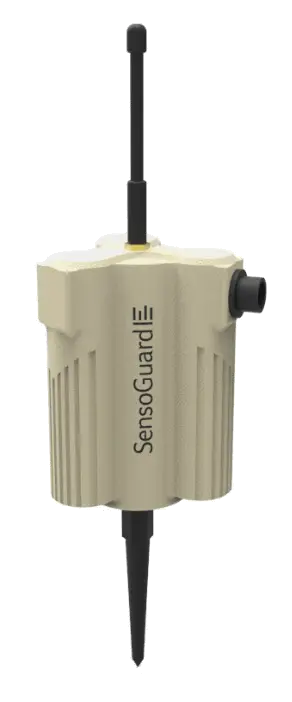
The AIO 2 seismic sensor detects footsteps up to 18m and vehicles or digging up to 35m, in a full 360° zone. It reports back over LoRA wireless at ranges up to 1km, so a single kit can cover a meaningful stretch of terrain from one HUB gateway. Paired with TACT-PIR or TACT-RADAR units in the same kit, coverage extends indoors as well as across open ground.
How Long Does the Kit Run in the Field?
Battery life varies by sensor type and task. The AIO 2 seismic sensor in the MOSS Outdoor Kit runs for up to one year. MINI-VIB units built for gate and container monitoring last up to three years, and TACT-PIR sensors run up to six months, each reflecting a different power draw. Every sensor is IP67 or IP68-rated and MIL-STD-810G compliant. That means the kit operates across a -40°C to 85°C range, performing the same in arctic cold or desert heat.
Which MOSS Sensor Fits Which Mission?
Each MOSS sensor is built for a different kind of ground, not a different level of security. Matching the sensor to the terrain and mission keeps false alarms low and coverage tight. For the reasoning behind early detection and alert classification specifically, see SensoGuard's guide to early warning systems for tactical operations.
| Sensor | Detection Type | Range | Battery Life | Best For |
|---|---|---|---|---|
| AIO 2 | Seismic (footsteps, vehicles, digging) | 18m footsteps / 35m vehicles & digging, 360° | Up to 1 year | Open ground perimeters |
| TACT-PIR | Passive infrared motion | 10m, 90° field of view | Up to 6 months | Indoor rooms, hallways |
| TACT-RADAR | Radar motion | 5m, 360° | Up to 6 weeks | Tight indoor spaces |
| MINI-VIB | Vibration (hits, drilling) | Up to 10m, hard surface | Up to 3 years | Gates, containers, fence lines |
Frequently Asked Questions
How quickly can the MOSS Kit be deployed?
MOSS sensors deploy in under 5 minutes with no trenching or cabling required. The full kit ships in a single weatherproof case with five sensors, a HUB gateway, and a rugged handset, so a two-person team can be operational on arrival without a professional installer.
What is the detection range of the MOSS AIO 2 sensor?
The AIO 2 seismic sensor detects footsteps up to 18m and vehicles or digging up to 35m, in a 360-degree zone around the unit, transmitting to the HUB over LoRA wireless at ranges up to 1km.
How long does the MOSS Kit's battery last?
Battery life varies by sensor type: the AIO 2 seismic sensor lasts up to 1 year, TACT-PIR up to 6 months, and MINI-VIB up to 3 years, reflecting each sensor's different power draw. All sensors use rechargeable batteries and return to the kit's charging station between deployments.