
A German designer just built a Hawaiian shirt that most AI-powered security cameras cannot recognize as a person. Simon Weckert's garment, covered in a chaotic pattern of pink, orange, and green blobs, was shaped through what he calls an "adversarial loop," an AI-driven trial-and-error process that breaks the visual continuity a computer vision model needs to recognize a human shape. As Weckert put it, AI surveillance systems "never learned what a human is, they learned what humans statistically look like" in training data. Disrupt that statistical pattern enough and the detector cannot bind the separate parts into one figure. "To a human it reads as an almost hypnotic textile," he said. "To the AI model it reads as nothing at all."
It is a clever piece of design research, and also a useful reminder for anyone responsible for a physical perimeter: if a camera and its AI model are the only thing standing between an intruder and a triggered alarm, that system has exactly one thing to fool.
Key Takeaways
Adversarial clothing patterns can defeat AI camera object detection by breaking the visual outline a model uses to recognize a human shape, but they have no effect on seismic ground-vibration sensors, which measure physical movement rather than appearance. In a two-layer system, both the seismic sensor and the camera's AI model can run at lower, more sensitive thresholds than either could standalone, because neither signal has to be certain on its own, only the correlation between them decides the alarm.
What the Shirt Actually Defeats
Object-detection models used in security cameras are trained on millions of labeled images to recognize the visual signature of a human body: a head above shoulders, limbs in roughly expected proportions, a silhouette that holds together as one connected shape as a person moves through frame. Weckert's pattern is designed to interrupt exactly that. The clashing color blocks break the outline the model relies on to group pixels into "person," so the detector's confidence score drops below the threshold needed to trigger a match. The camera still records the footage. The AI model attached to it simply does not flag what it is looking at.
The Blind Spot Built Into Camera-Only Security
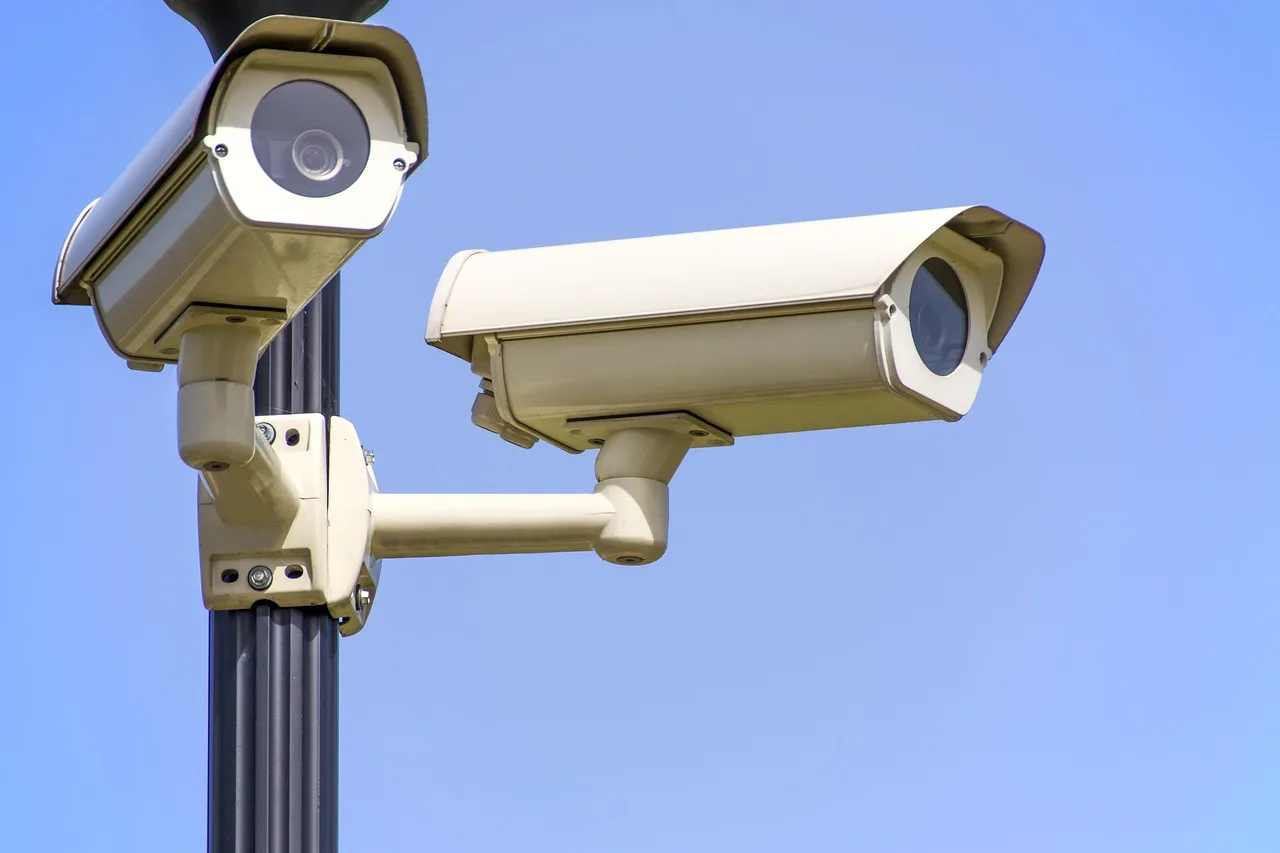
This is not really a story about one shirt. It is a preview of a structural weakness in any perimeter system that relies on a camera and its AI model as the sole method of detection. If "a person is here" is a judgment call made entirely by an image classifier, then anything that degrades that classifier's confidence, adversarial clothing, poor lighting, fog, or a low camera angle, weakens the entire system at its single point of failure. A camera-only setup does not get a second opinion. If the model says no one is there, the system behaves as though no one is there.
Why Ground Vibration Does Not Care What You Are Wearing
Seismic intrusion detection works on an entirely different physical principle. Buried sensors measure the ground vibration a person's footsteps, a vehicle's weight, or digging activity produce as they travel through soil, not what that person looks like from above. A footstep generates a measurable seismic signature whether the person wearing the shoe is dressed in a business suit, camouflage fatigues, or a shirt specifically engineered to defeat an AI camera. There is no visual pattern to disrupt, because there is nothing visual being measured in the first place. Seismic sensors do not classify images, so there is no model prediction for adversarial clothing to attack.
Why the Real Advantage of Two Layers Is Correlation, Not Redundancy
The common explanation for pairing seismic sensors with camera verification is that two detection methods are safer than one. That is true, but it undersells the more useful part of the design. (For the general mechanics of how seismic and camera layers work together outside this specific scenario, see how dual-layer detection works.) In a single-layer system, whatever generates a trigger also has to be the thing that decides whether to sound the alarm, so that layer has to be tuned conservatively. Set a camera's AI model or a lone seismic sensor too sensitive, and every passing animal, gust of wind, or minor vibration becomes an alarm, and a system that cries wolf gets its sensitivity turned down or its alerts ignored within weeks.
A two-layer system breaks that trade-off. A seismic trigger in a system like InvisiFence Plus paired with OutWatch does not sound an alarm on its own, it requests camera verification. Because a false trigger at that stage costs nothing, the camera checks, confirms nothing is there, and the event is dismissed before it ever reaches a human, the sensor's detection threshold can be set far lower than it could be in a standalone system. That lower threshold catches fainter, slower, more deliberate movement that a conservative, alarm-fatigue-avoiding single-layer setting would filter out entirely. Combined seismic-and-camera systems cut false alarms by over 90% compared to camera-only detection, precisely because the correlation step absorbs the noise a more sensitive first layer produces, rather than passing it straight to a guard or a phone alert.
The same logic runs in the other direction. A standalone camera has to hold its AI model to a high confidence threshold, because every flagged detection becomes an alarm on its own, so a borderline, partially obscured, or oddly patterned read is usually suppressed to avoid a false alert. In a two-layer system, the camera does not have to clear that bar alone either. A lower-confidence visual read is enough to confirm an event as long as it lines up with a seismic trigger at the same place and time, because neither signal is trusted in isolation, only the correlation between them is. That is what actually closes the gap the shirt is designed to exploit: even if an adversarial pattern degrades the camera's confidence score below what a standalone system would require, that same partial, low-confidence read can still be enough to confirm an alarm once it is matched against an independent seismic trigger.
Because neither signal alone triggers an alarm, both the seismic sensor and the camera's AI model can run more sensitively than either could standalone.
What Happens When the Shirt Meets a Two-Layer System
Someone wearing adversarial camouflage designed to defeat AI object detection would still generate a seismic trigger the moment they set foot inside a protected zone. That is the part camera-only thinking misses: the ground does not need to recognize what someone is wearing to register that they are walking on it. The camera does not need a clean, high-confidence match either. Because the seismic trigger already narrows down exactly when and where to look, even a degraded, low-confidence visual read, movement, a rough outline, a shape the model cannot fully classify, is enough to corroborate the seismic event and confirm an alarm. A standalone camera system holding out for full confidence before it commits to an alert would likely discard that same read and stay silent. Paired with a seismic trigger, it does not have to.
How SensoGuard's Two-Layer Architecture Applies This
Seismic Shield Pro and InvisiFence Plus detect footsteps, vehicle movement, and digging activity through buried sensors that read ground vibration directly, independent of lighting, weather, or what an intruder is wearing. When a sensor triggers, the alert can hand off to OutWatch, SensoGuard's AI analytics platform, which slews a camera to the exact triggered location and applies visual verification before anything reaches an operator as a confirmed alarm. That correlation step, ground-truth detection first and visual confirmation second, is what lets the seismic layer run more sensitively than a standalone system could ever afford to. It is also why the same architecture holds up against threats far more mundane than an adversarial shirt: wildlife, blowing debris, and weather, the everyday sources of false alarms that vision-only detection struggles to filter on its own.
The Takeaway for Perimeter Security
Weckert's shirt is a smart piece of adversarial design, and it is a fair challenge to any security system built entirely around what a camera thinks it sees. The fix is not a better camera model, since every classifier trained on visual data will have some pattern that degrades its confidence. The fix is not depending on vision alone for the first detection. A physical layer that measures something a camera cannot, weight moving across the ground, gives a perimeter system a trigger no clothing pattern was ever designed to defeat, and lets the visual layer do what it is actually good at: adding context and confirmation, not carrying the entire decision alone.
Frequently Asked Questions
Can clothing designed to fool AI cameras defeat seismic intrusion detection?
No. Seismic sensors detect ground vibration from footsteps and physical movement, not visual appearance, so clothing patterns designed to confuse camera-based object detection have no effect on them.
Why do two-layer security systems combine seismic sensors with AI cameras?
Seismic sensors trigger on physical movement and identify its exact location through ground vibration, while cameras and AI analytics add visual verification and context. Each layer covers a gap the other one has.
Why can two-layer systems use more sensitive detection thresholds than single-layer systems?
In a two-layer system, neither a seismic trigger nor a camera detection sounds an alarm by itself, each one only requests confirmation from the other. Because a false trigger from either layer costs nothing on its own, operators can lower both the seismic sensor's detection threshold and the camera's AI confidence threshold, catching fainter movement and lower-confidence visual reads that a single-layer system would have to discard to avoid false alarms.
What happens if the camera can't visually confirm what triggered the seismic sensor?
The seismic trigger still creates a time-stamped, location-specific event with recorded footage attached, giving security teams something concrete to review. A camera-only system whose detection model fails to classify the same scene produces no equivalent record at all.