
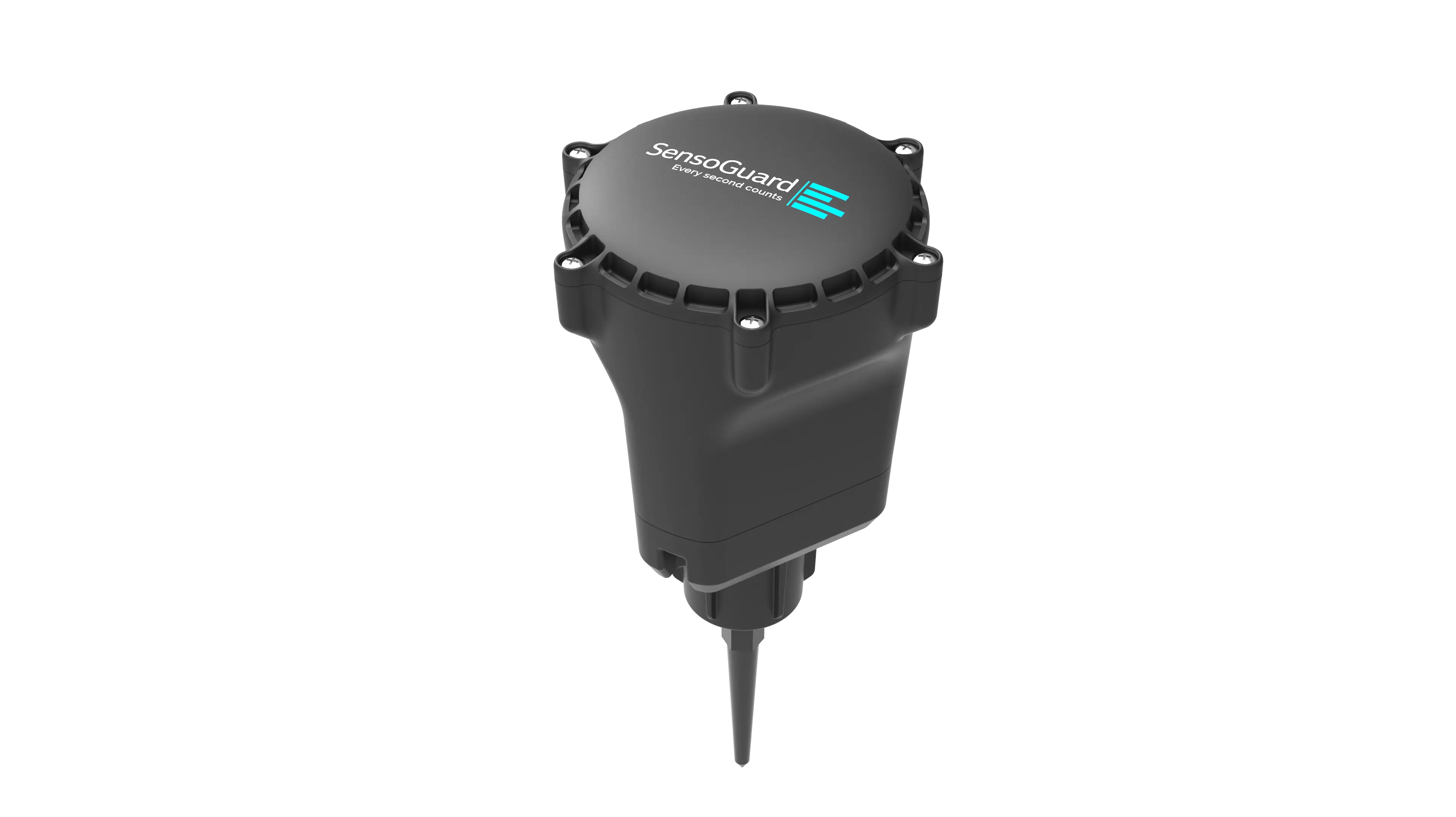
Most seismic sensors are only as good as where they process the signal. A sensor that captures raw ground vibration and forwards it to a central unit for interpretation puts the intelligence somewhere other than the point of detection. SensoGuard sensors work differently: each unit carries its own DSP processor and classifies the vibration signature, footsteps, digging, or a vehicle, at the sensor itself, before anything is transmitted anywhere.
That distinction sounds architectural, but it changes what a system can do in the field: how fast it responds, how much wireless traffic it generates, and how long a battery-powered sensor can run unattended. For a broader look at how seismic detection works in general, see our guide to what seismic sensors are and how they detect intruders. This article focuses specifically on the processing architecture behind SensoGuard's sensors, wired and wireless.
What On-Sensor DSP Processing Actually Means
A DSP, or digital signal processor, is a chip built to analyze a signal in real time. In a SensoGuard seismic sensor, that chip sits inside the buried unit itself. When ground movement, a footstep, a vehicle, or digging, creates a vibration pattern, the sensor's onboard DSP analyzes the waveform on the spot and checks it against known intrusion signatures.
That is a meaningfully different design from a sensor that simply forwards raw analog vibration data to a separate processing unit for interpretation. A buried sensor that only relays data is not the same as a smart sensor that classifies the event locally. The decision about whether an event is a threat starts at the sensor, not further down the chain.
Why Processing Location Is an Architecture Decision
Where a system performs its signal analysis is not a minor implementation detail; it determines how the whole deployment behaves. A design that centralizes interpretation depends on every sensor successfully relaying usable raw data back to one place, and on that central unit correctly making sense of everything at once. A design that classifies at the sensor removes that single point of dependency: each unit reaches its own conclusion before the alarm ever leaves the ground.
SensoGuard applies this principle across both of its seismic sensor architectures, wired and wireless, though the practical benefit looks different in each.
Wired Architecture: InvisiFence Plus
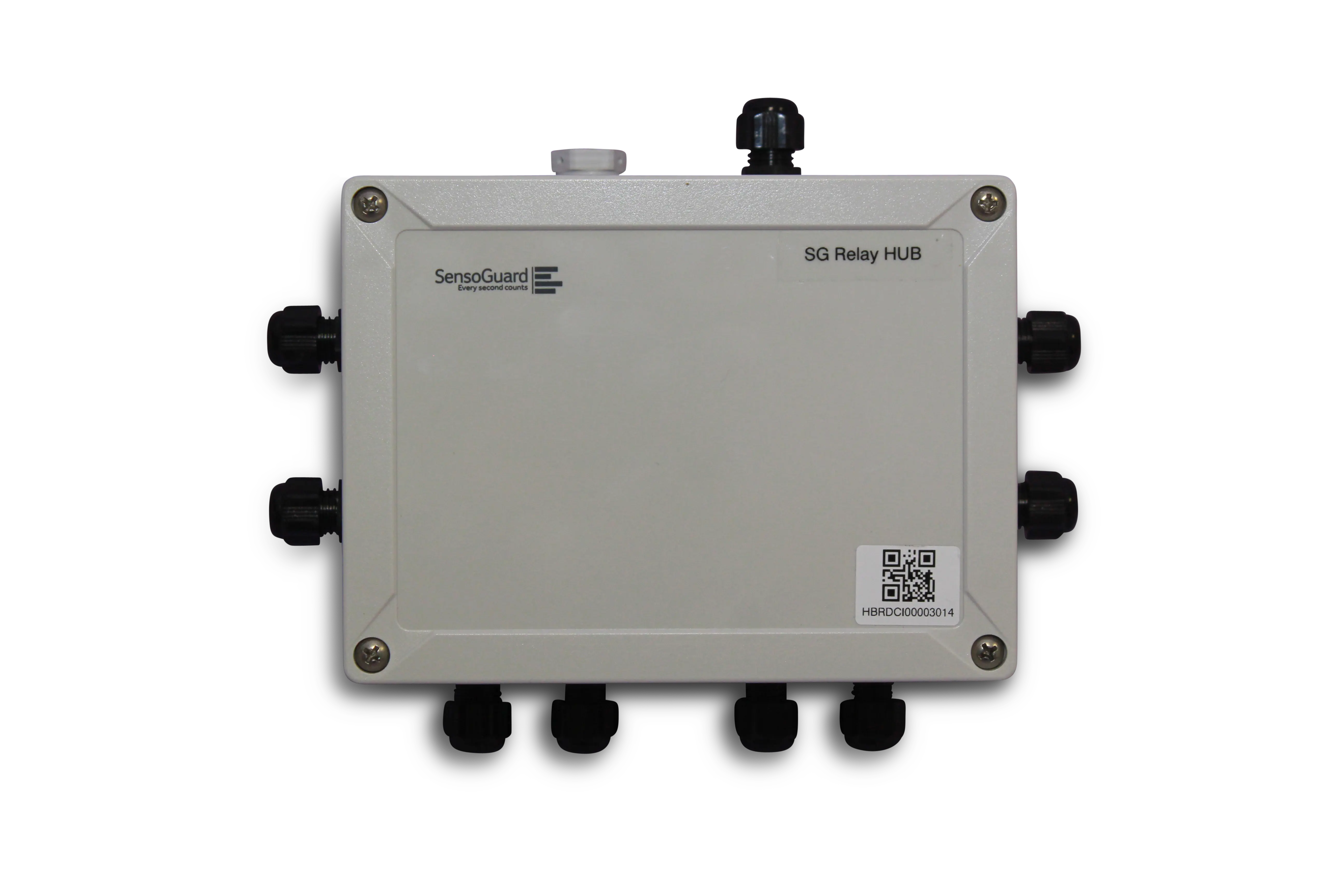
In InvisiFence Plus, each buried sensor includes a dedicated DSP processor and communicates digitally with the HUB over RS485. That makes the system fully digital and distributed by design, rather than a legacy layout that carries raw analog sensor signals down a cable to one central processing unit for interpretation. Because each sensor already knows what it detected, the architecture also supports pinpoint intrusion localization: the HUB knows which specific sensor along the line triggered, not just that something happened somewhere on the cable.
Wireless Architecture: Seismic Shield
In a wireless deployment, the same sensor-level intelligence creates a different advantage. Because each sensor already classifies its own signal, only confirmed alarms need to be transmitted to the HUB, not a continuous stream of raw vibration data for comparison elsewhere. That cuts wireless traffic, lowers the sensor's detectability, and directly extends battery life. Seismic Shield wireless sensors communicate over LoRa and offer up to 6 years of battery life in long-term installations, a figure that depends directly on how little the sensor needs to transmit.
For larger and more demanding sites, SensoGuard's AIO XR sensor extends the same architecture further, covering 250 m² for footsteps and 2,500 m² for vehicles and digging, while keeping the same embedded DSP processing and long-life wireless operation. See the full UGS sensors and receivers lineup for hardware options built on this platform.
Where On-Sensor Processing Matters Most: Exposed Perimeter Technologies
The case for sensor-level processing is clearest when you compare it to technologies that depend on exposed, known-geometry hardware to work at all.
PIR detectors
Passive infrared detectors are useful in selected zones, but they are prone to nuisance alarms from birds, small animals, and other environmental movement, since they are reacting to heat and motion rather than classifying a specific event. They are also mounted, visible devices that can be located and avoided once identified.
Active IR beams
Active IR beams create a defined detection line, which is useful for a clean boundary, but that line depends on precise alignment and a clear optical path between two exposed units. A determined intruder can study that known geometry, then avoid it, block it, or physically damage the hardware. Because SensoGuard's seismic sensors operate underground with no line-of-sight requirement, there is no equivalent optical path to map or defeat.
Fence-mounted sensors carry a related weakness: they only register an event at the moment of contact with the barrier itself, which is inherently later than detecting the approach through the ground. Our seismic sensors overview covers that broader comparison, including cameras and radar, in more depth.
Technical Snapshot: SensoGuard Seismic Shield
| Specification | Seismic Shield |
|---|---|
| Footstep detection radius | Up to 12 m / 39 ft |
| Vehicle detection radius | Up to 25 m / 82 ft |
| Digging detection radius | Up to 25 m / 82 ft |
| Detection zone | 360° coverage |
| Communication | LoRa wireless |
| RF frequency | 433 MHz default, 868/915 MHz optional |
| Transmission range | Up to 250 m with antenna below ground; up to 1 km with antenna above ground |
| Installation depth | 30–50 cm |
| IP rating | IP68 |
| Battery life | Up to 6 years |
Optional Verification Layer
In some architectures, AI cameras are added on top of seismic detection for automatic visual verification, an option available through OutWatch. That is a useful system design choice, but it is not a requirement for seismic detection itself. The core capability remains underground sensing with on-sensor DSP analysis, whether or not a verification layer is added on top.
Frequently Asked Questions
What does DSP processing mean in a seismic sensor?
DSP stands for digital signal processor. In SensoGuard sensors, each unit uses its own DSP chip to analyze the vibration signal locally and match it against known signatures such as footsteps, vehicles, and digging, rather than forwarding raw data to a separate unit for interpretation.
Does sensor-level processing work in both wired and wireless systems?
Yes. In wired InvisiFence Plus, each sensor processes its own signal and communicates digitally with the HUB over RS485. In wireless Seismic Shield, the same on-sensor analysis means only classified alarms, not raw data, need to be transmitted over LoRa.
How does on-sensor processing affect wireless battery life?
Because only confirmed alarms are transmitted rather than continuous raw vibration data, wireless traffic drops significantly. That reduction is a major reason Seismic Shield's wireless sensors can run for up to 6 years on a single battery in long-term installations.
What is the difference between InvisiFence Plus and Seismic Shield architecture?
InvisiFence Plus is a wired system where sensors communicate digitally with a central HUB over RS485 and support pinpoint intrusion localization. Seismic Shield is a wireless system using LoRa communication, suited to sites where trenching for a wired cable is not practical.
Is on-sensor processing more reliable than centralized analysis?
On-sensor processing removes the dependency on a central unit correctly interpreting raw data transmitted from the field. Because each sensor classifies its own signal before anything is sent, the system does not rely on a single central point to make sense of every event.
Conclusion
Early detection depends on where a system draws its conclusions, not just where it places its sensors. By putting a DSP processor in every unit, SensoGuard moves the decision to the point of detection itself, across both wired InvisiFence Plus and wireless Seismic Shield deployments.
The result is a perimeter architecture that is less dependent on centralized interpretation, harder to defeat than exposed technologies like PIR detectors and active IR beams, and, in wireless deployments, efficient enough to run on battery power for years at a time.