

Sensei is SensoGuard's way of explaining how our security systems actually work, one idea at a time. In 5 simple steps, Sensei shows how SensoGuard's sensors detect movement underground, without needing a clear line of sight. From the first footstep to the alert on your phone, here's exactly what happens between the ground and your screen.
1. Movement Above Ground
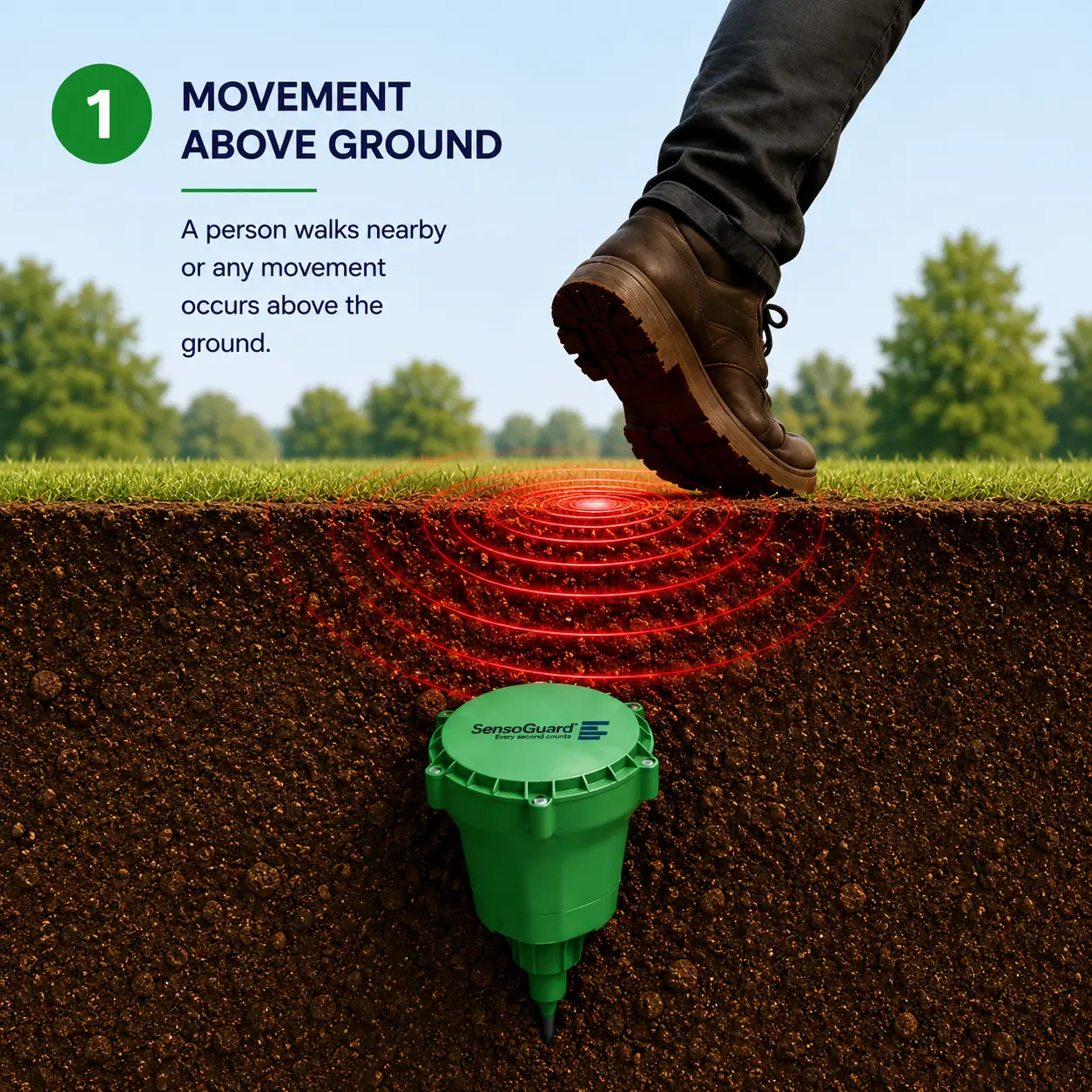
It starts above the surface. A person walks nearby, a vehicle rolls past, or any other movement occurs above the ground. None of that requires a camera pointed at it or a fence for it to touch, it just has to happen somewhere within range of a buried sensor.
2. Vibrations Travel Through the Soil
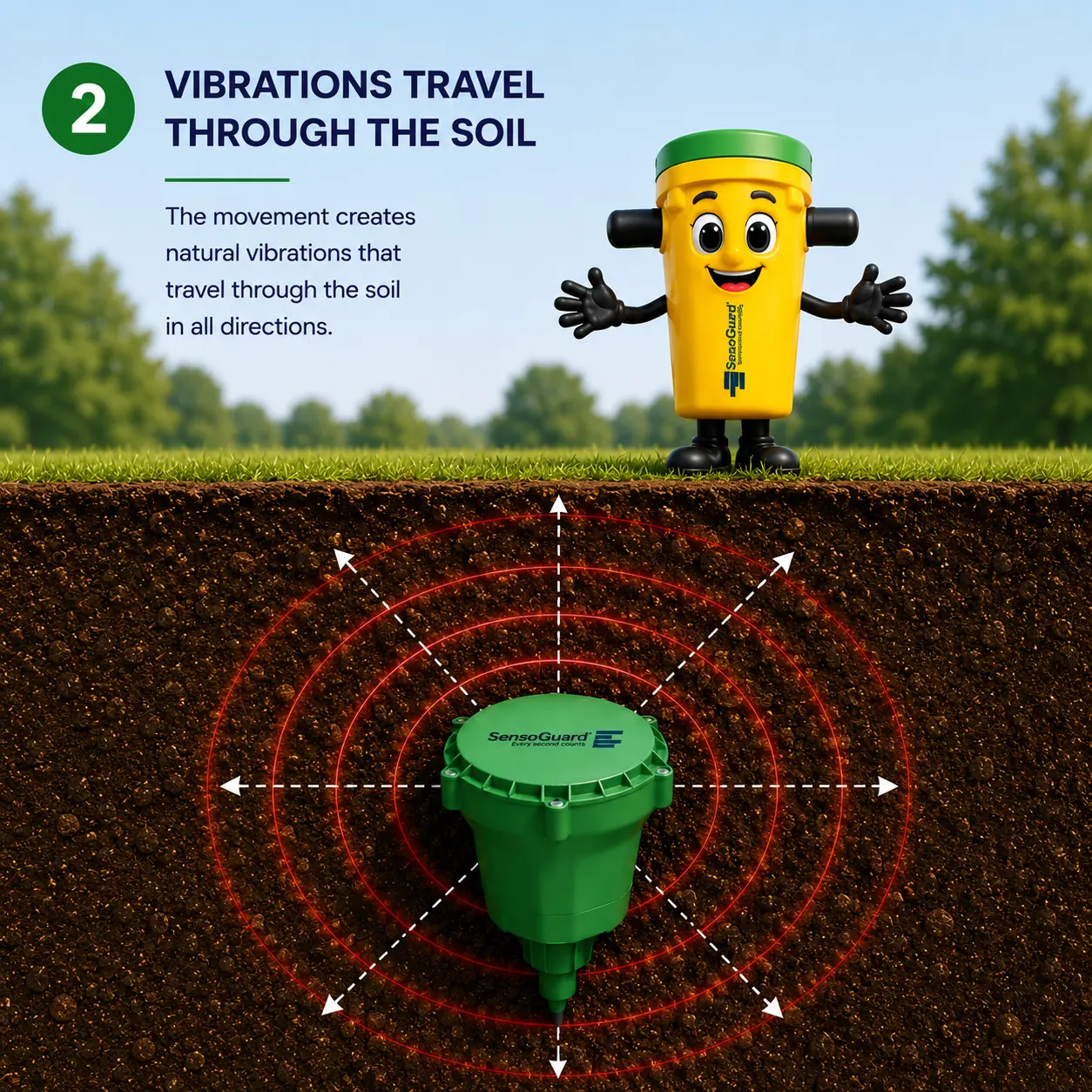
That movement creates natural vibrations, and soil conducts them efficiently. The vibrations travel outward through the ground in all directions, not just toward the sensor, which is why a buried unit can pick up activity well beyond its own footprint without needing anything above ground to relay the signal.
3. The Sensor Detects the Vibrations
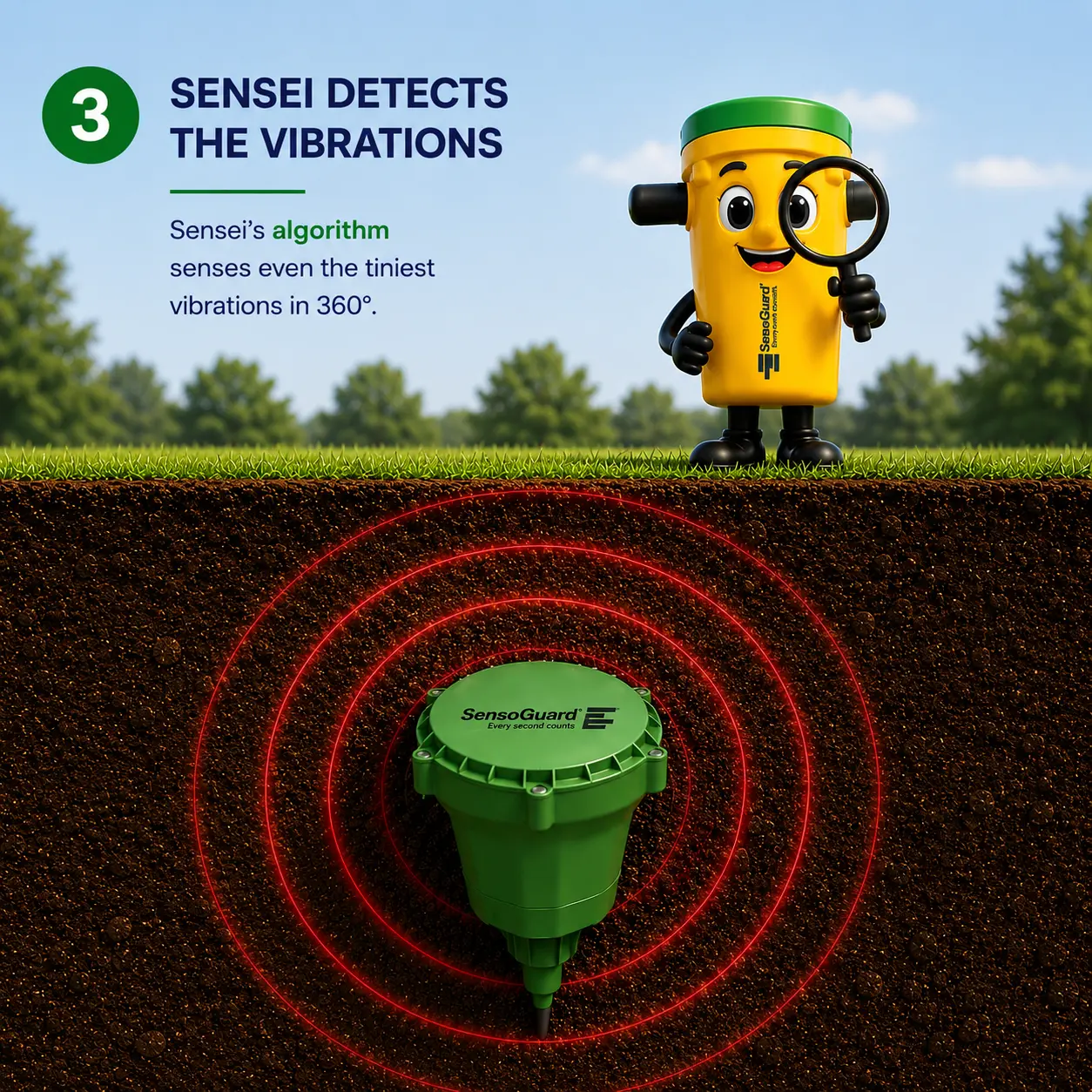
Once vibrations reach the buried unit, the sensor picks them up in full 360-degree coverage around itself. It's built to catch even the tiniest disturbance, not just the obvious ones, which is what makes underground detection reliable across a whole protected area rather than one narrow path.
4. The System Analyzes the Signals
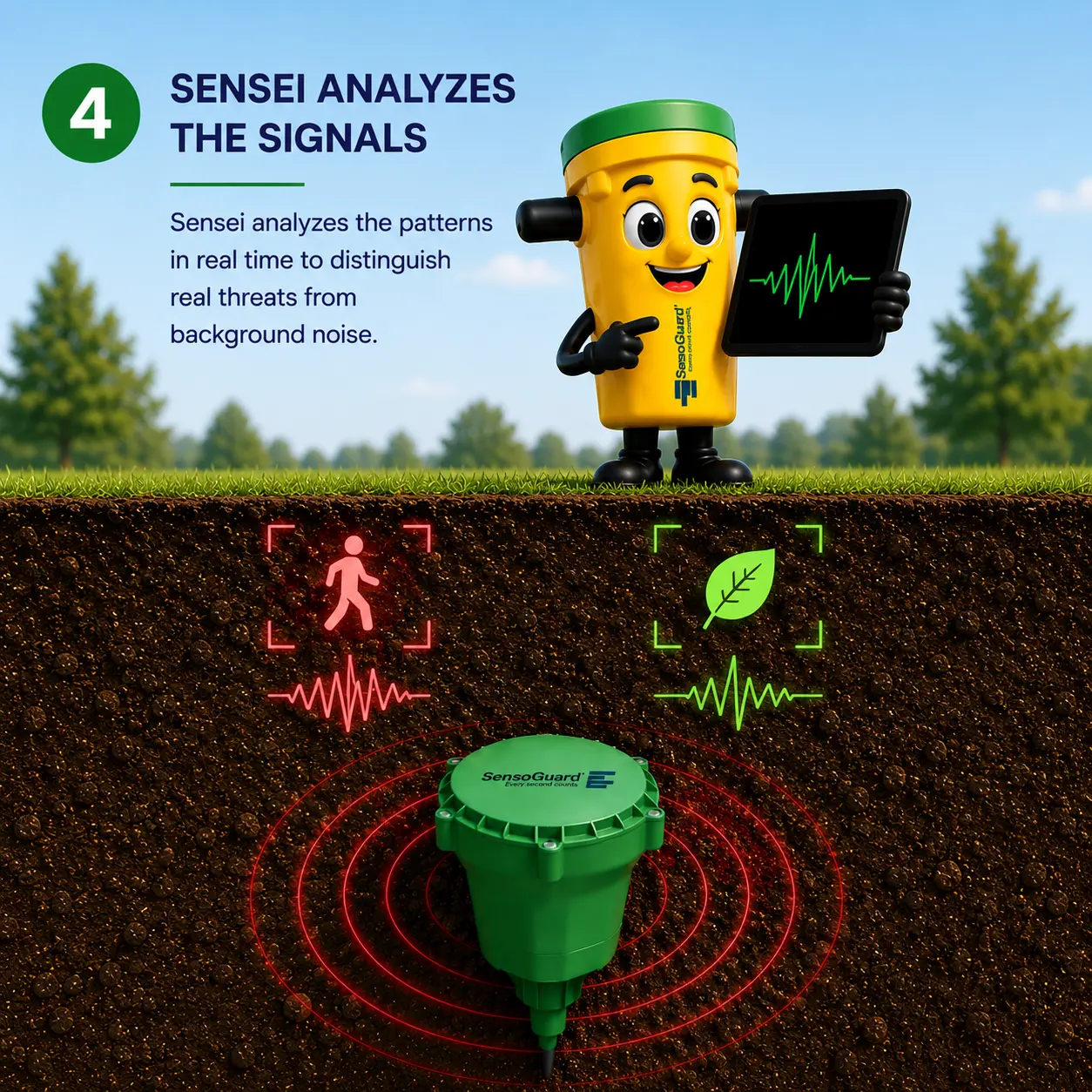
Picking up a vibration is only half the job. SensoGuard's algorithm analyzes the pattern, rhythm, and intensity of each signal in real time to distinguish a real threat from background noise, wind, small animals, or other nuisance sources. That's the step that keeps false alarms down: the system isn't just reacting to movement, it's reading what the movement actually is. For the deeper technical explanation of how that classification works, see how seismic sensors detect intruders.
5. Alert Sent in Real Time
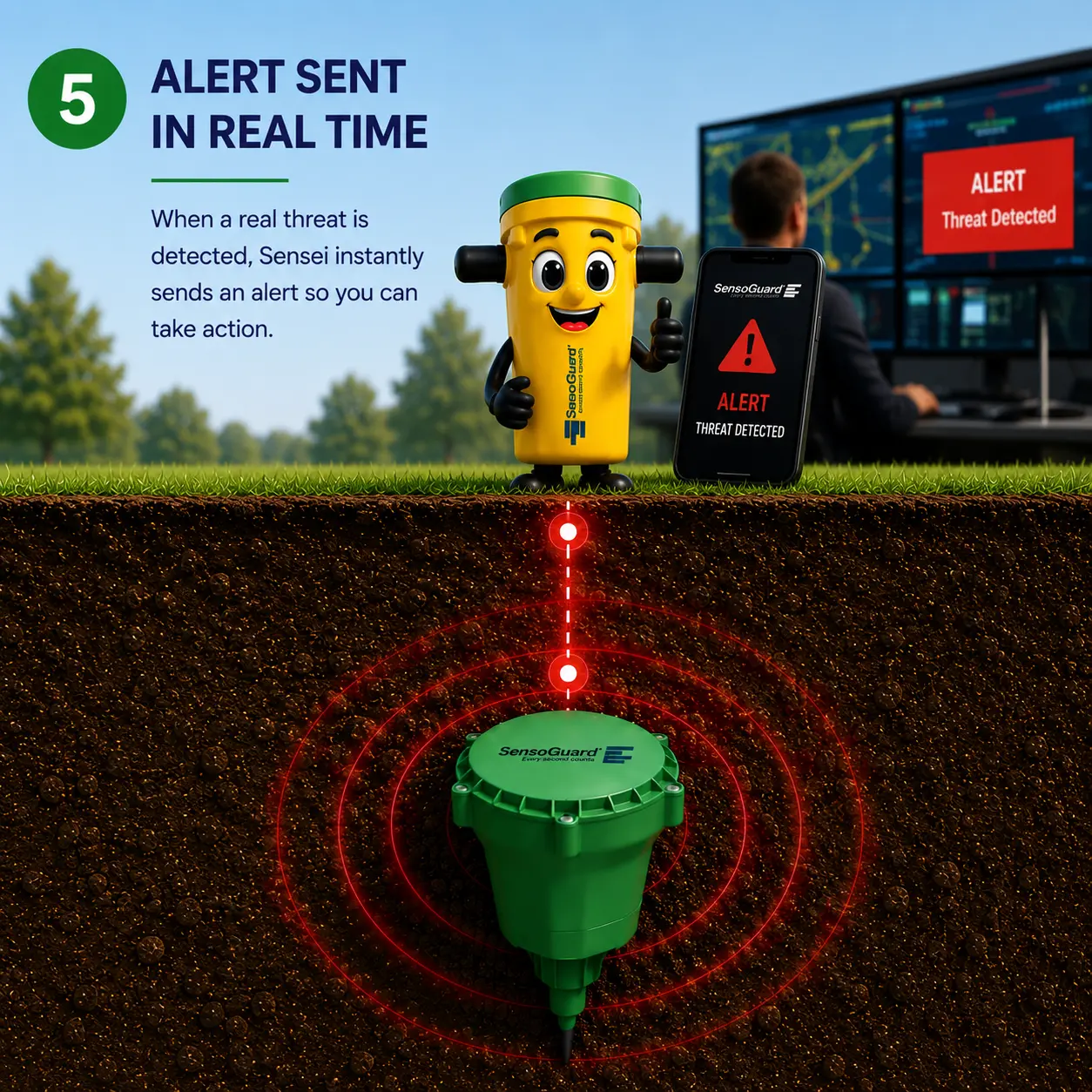
When a real threat is confirmed, the system sends an alert immediately, so you can act while it still matters. That's the whole point of the four steps before it: turning a footstep in the yard into a real-time alert on your phone, with enough time left to actually respond.
Frequently Asked Questions
How does the system detect movement above ground?
Any movement above a buried sensor, a person walking nearby, a vehicle passing, or digging, disturbs the ground and creates a vibration. That disturbance is the starting point for every detection event the system picks up.
How do those vibrations reach the sensor?
Once movement creates a disturbance, the resulting vibrations travel outward through the soil in all directions. Because soil conducts vibration efficiently, the sensor can pick up movement well beyond its own immediate footprint without needing a direct line of sight.
How does the system tell a real threat from background noise?
SensoGuard's algorithm analyzes the pattern, rhythm, and intensity of each vibration in real time, not just whether one occurred. That lets it distinguish a footstep or vehicle from wind, small animals, and other background noise before ever raising an alert.
What happens after the system detects a real threat?
Once the signal is confirmed as a genuine threat rather than background noise, the system sends an alert immediately, in real time, so you have the chance to verify what's happening and respond, rather than finding out after the fact.