
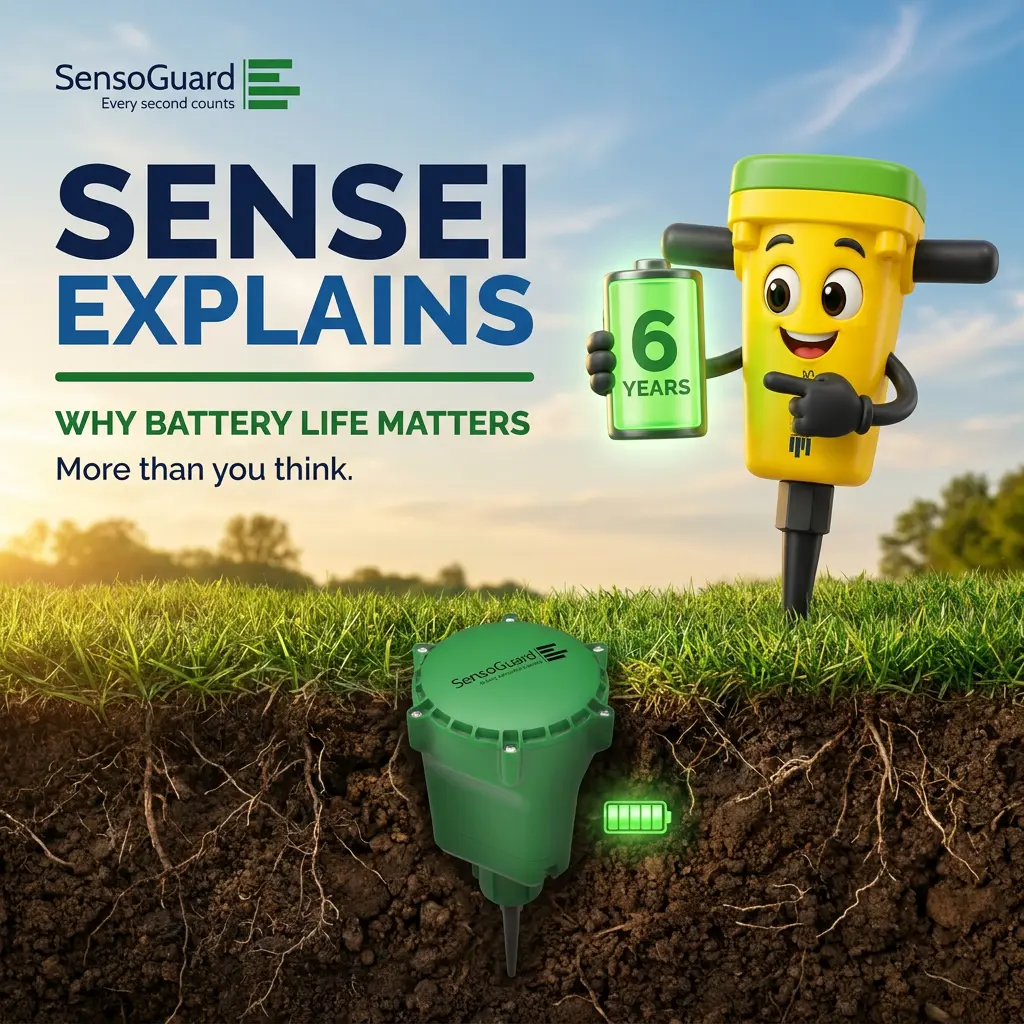
Sensei is SensoGuard's way of explaining how our security systems actually work, one idea at a time. This time, Sensei is answering a single question: why does battery life matter so much in a buried seismic sensor? The short answer is simple. A sensor that needs frequent battery changes is not truly unattended. Here's the full breakdown.
Most Sensors Spend Their Energy Talking, Not Listening
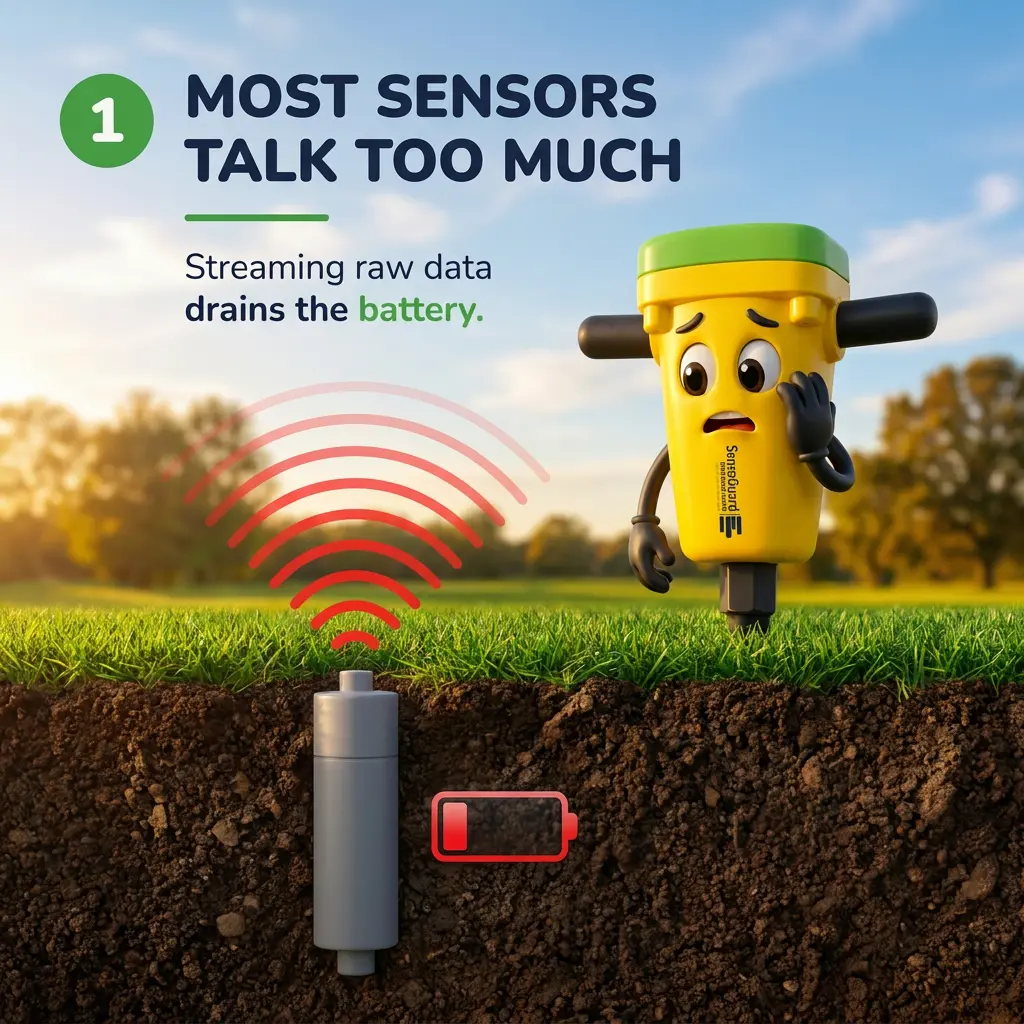
Traditional wireless sensors often stream raw vibration data back to a central unit for analysis. Every transmission costs power. Over months and years, that constant radio activity becomes the biggest drain on the battery. The result? Sensors that need servicing every few months or every year, even if nothing is happening on the ground.
How On-Sensor DSP Changes Everything
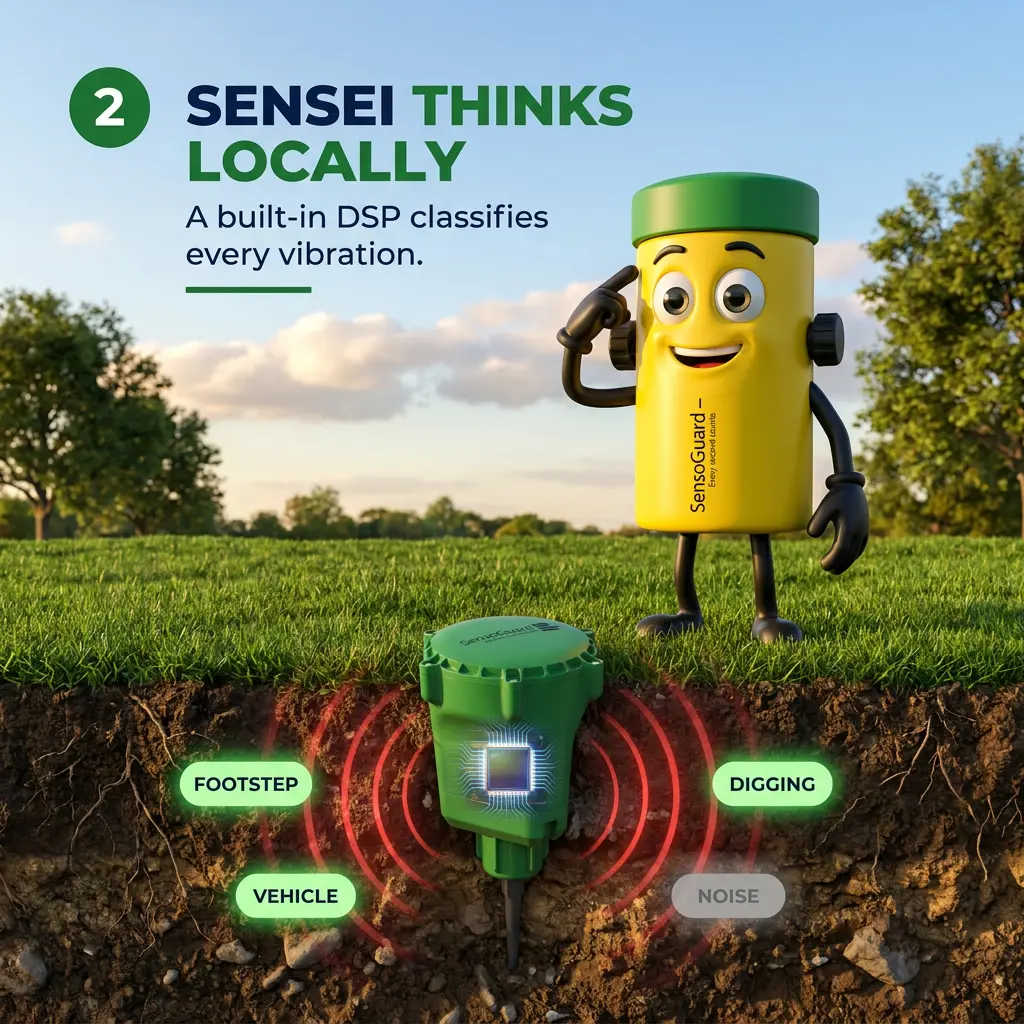
SensoGuard sensors work differently. Each unit carries its own digital signal processor (DSP) right next to the sensing element. When the ground vibrates, the DSP analyzes the signal locally and classifies it: footstep, vehicle, digging, or background noise. For the full technical picture, see our deep dive on sensor-level DSP processing.
One Short Alarm. That's It.
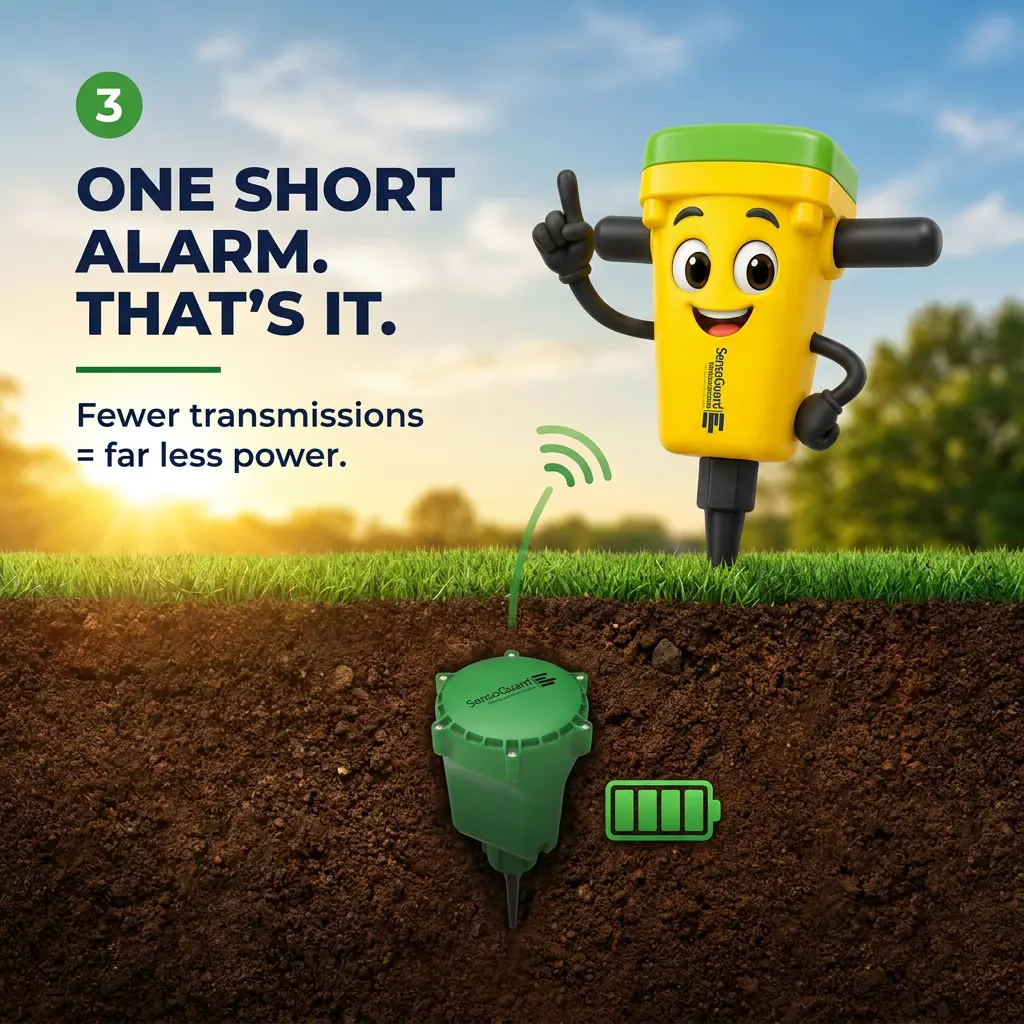
Only when a real threat is confirmed does the sensor send a short alarm message over LoRa. Background noise never leaves the sensor. That's the main reason AIO X and AIO XR sensors are rated for up to 6 years of continuous operation on a single non-rechargeable battery.
What 6 Years Actually Means in the Field
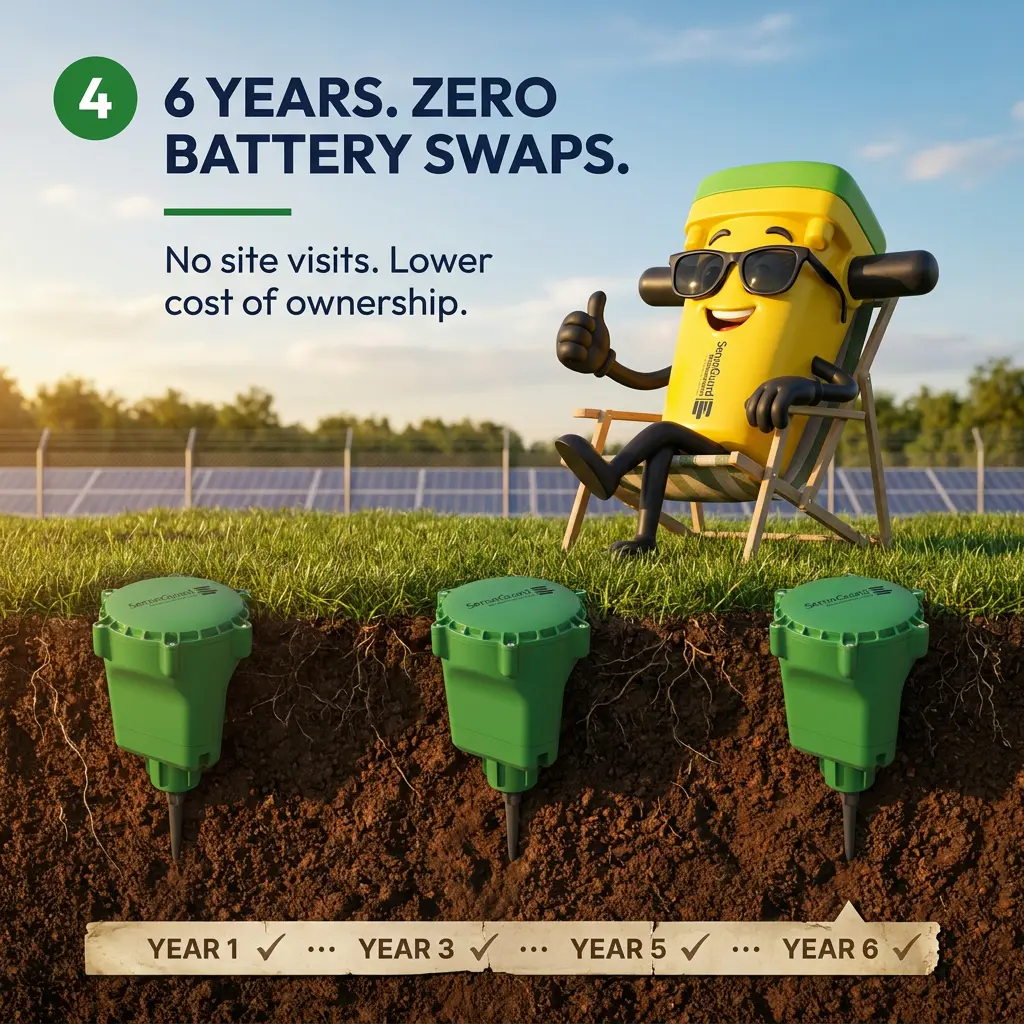
- No scheduled battery replacements for half a decade
- No repeated site visits to remote locations
- Lower total cost of ownership
- Higher reliability: the system stays fully operational even where access is difficult, such as border points, solar farms, pipelines, archaeological sites, and private estates
For comparison, the AIO 2.0, designed for mobile and tactical use, runs on a rechargeable battery rated for up to 12 months. That's still excellent for temporary deployments, but deliberately different from long-term fixed installations.
Real-World Impact
A sensor that lasts 6 years is not just convenient. It changes how you design a perimeter:
- You can bury sensors in hard-to-reach places and leave them alone
- Maintenance teams focus on higher-value tasks instead of routine battery swaps
- The system remains invisible and undisturbed for years
In short: long battery life is what turns a smart sensor into a truly unattended security layer.
After 6 Years: Just Swap the Battery
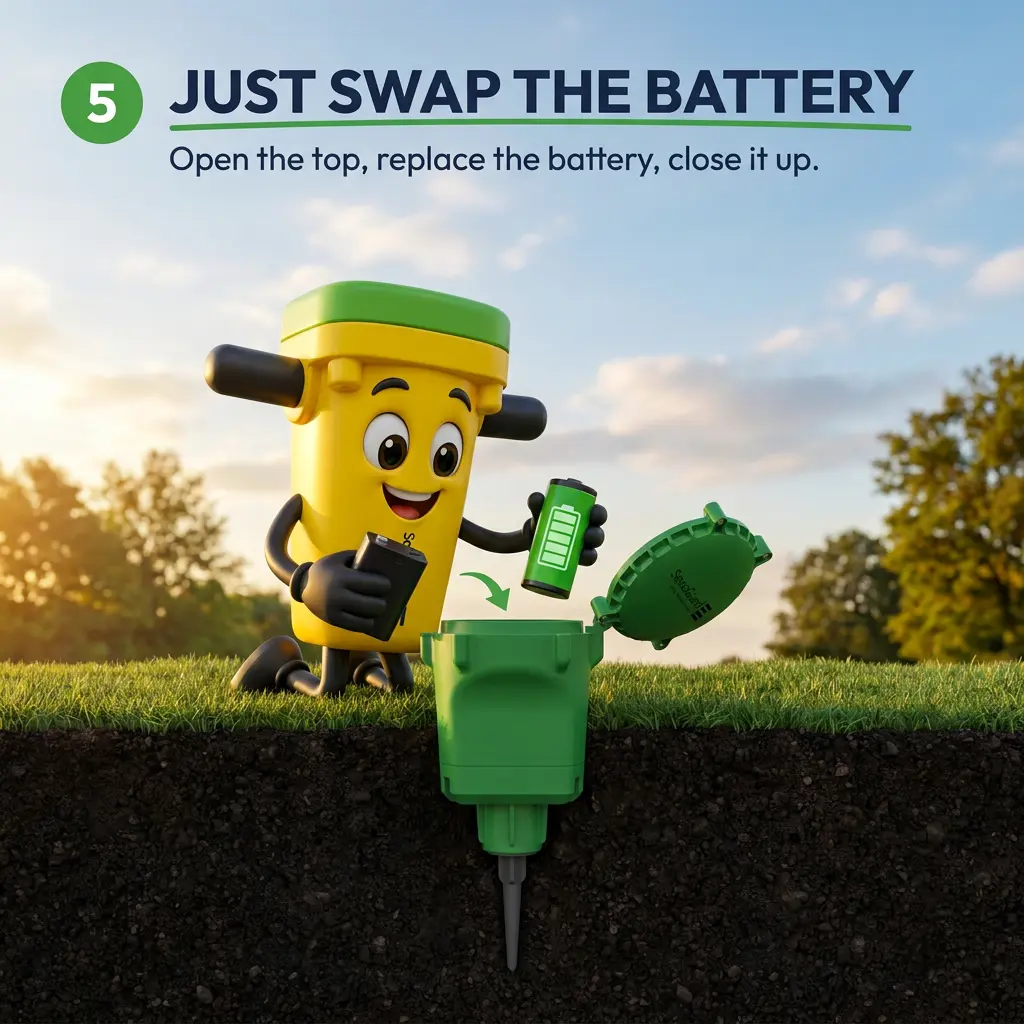
When the battery finally runs down, there's no need to replace the sensor. The battery sits inside the top part of the sensor: open it, swap the battery, and close it up. The sensor and the rest of the installation stay in place, ready for the next 6 years.
Frequently Asked Questions
Why do AIO X and AIO XR last up to 6 years?
Because the onboard DSP classifies events locally. Only confirmed alarms are transmitted, so radio activity, the main power consumer, stays extremely low.
Is the battery rechargeable?
No. AIO X and AIO XR use high-capacity non-rechargeable batteries optimized for long-term, maintenance-free operation. The AIO 2.0 uses a rechargeable battery for tactical and mobile use.
Does extreme weather affect battery life?
The sensors are rated IP68 and operate from –40 °C to +85 °C. Battery performance remains within specification across that full range.
What happens after 6 years?
Only the battery needs replacing. It sits inside the top part of the sensor, so you open it, swap the battery, and close it again. The sensor and the rest of the installation stay in place.
Does local processing also improve security?
Yes. Because only short alarm packets are sent instead of continuous raw data, the wireless signal is much harder for an adversary to detect or locate.