
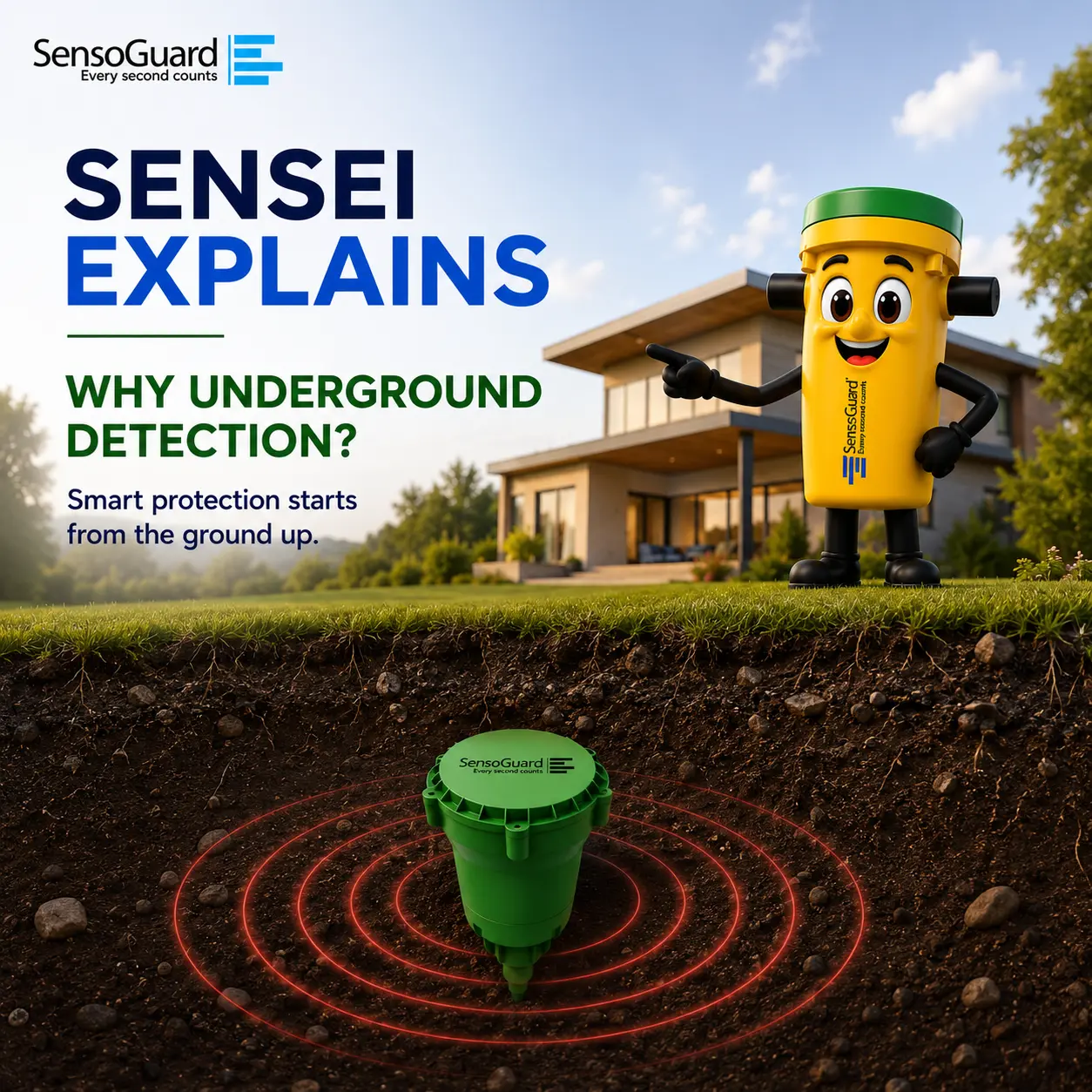
Sensei is SensoGuard's way of explaining how our security systems actually work, one idea at a time. This time, Sensei is answering a single question: why detect from underground at all? The short answer is that a sensor buried in the ground sees, hears, and holds up in ways a camera or fence-mounted device never can. Here's the full breakdown.
Invisible Protection
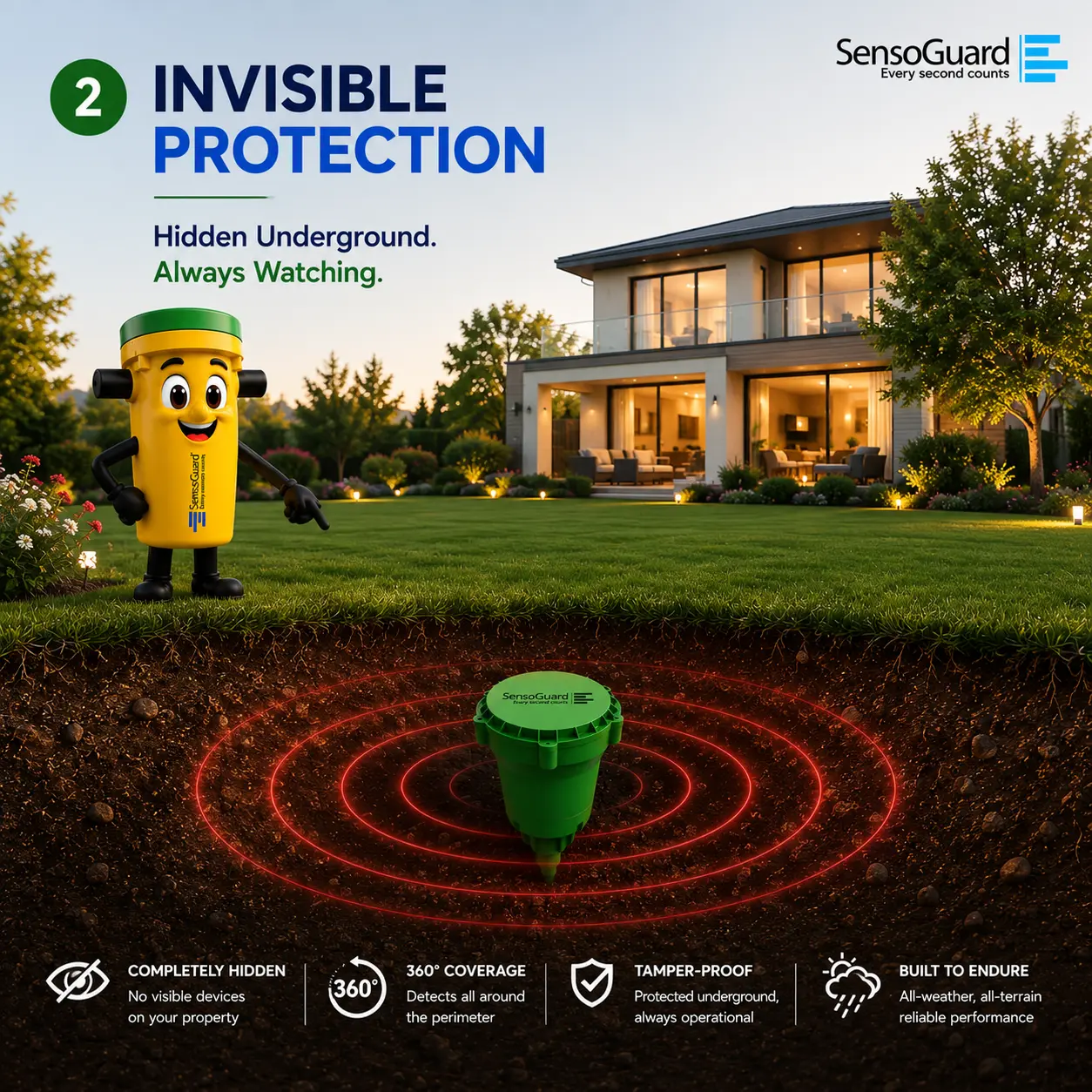
A buried sensor is completely hidden. There's no visible device on the property for an intruder to spot, case, or plan around, and coverage extends 360 degrees around the unit rather than in one fixed direction. Because it's underground, it's also inherently tamper-proof: there's no exposed housing to disable before it's already triggered. It's built to keep working through rain, heat, and rough terrain, all-weather, all-terrain, always on.
Detect Before They Reach the House
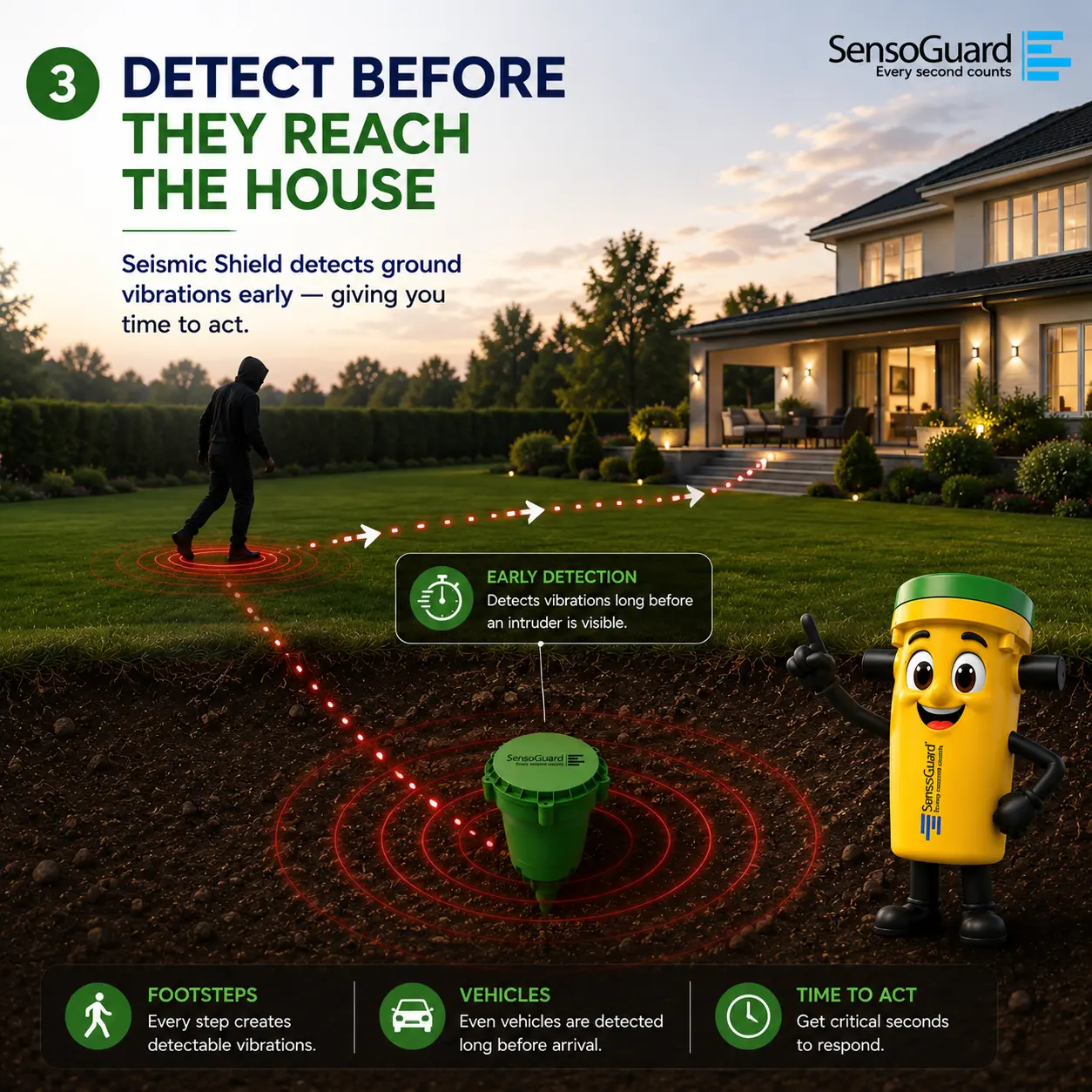
Every footstep creates a detectable vibration in the ground, and so does every vehicle. That means Seismic Shield can register movement while an intruder is still crossing the yard, well before they're visible and well before they reach the door. That gap between detection and arrival is what actually gives you time to verify what's happening and respond, rather than finding out only once someone's already at the house.
No Line of Sight Needed
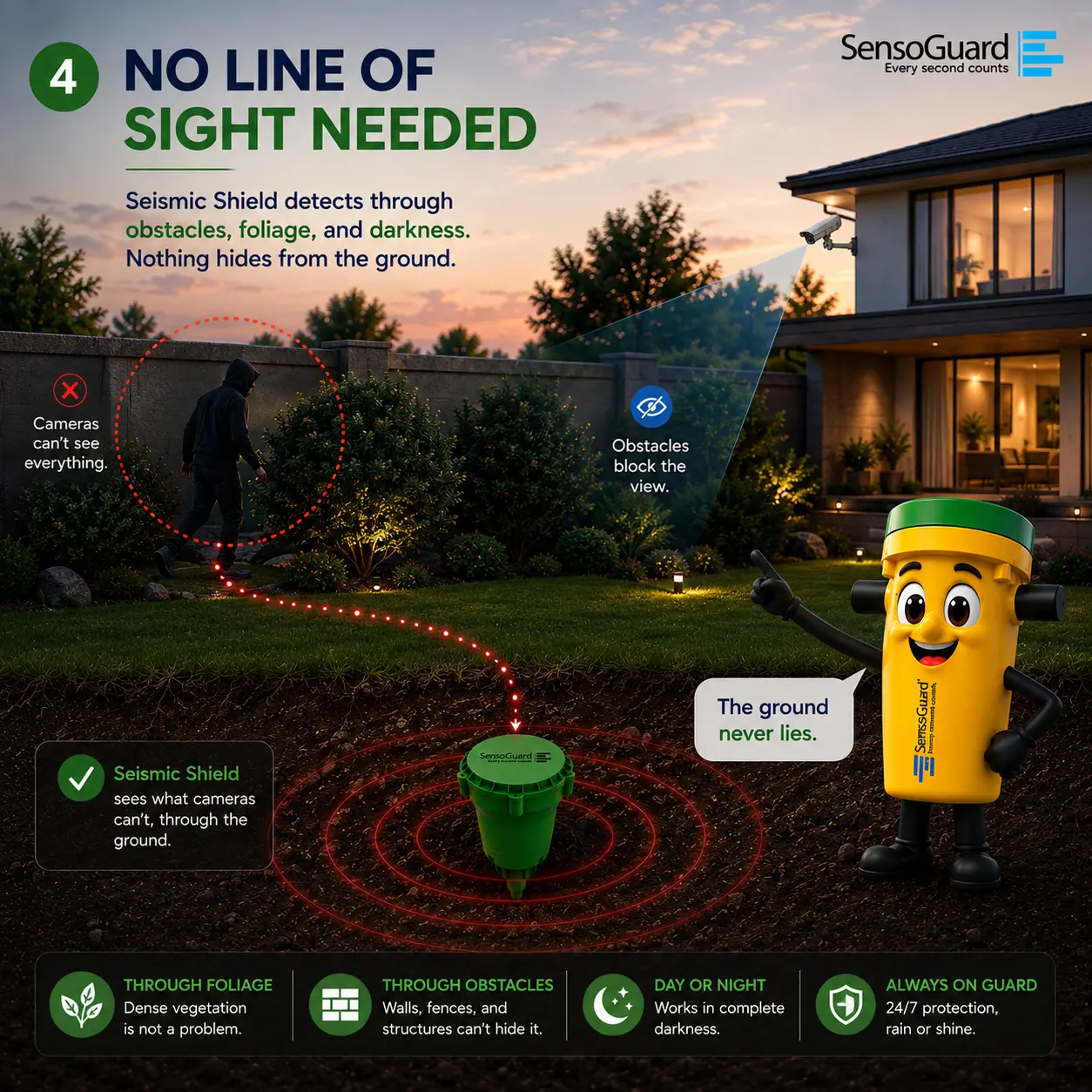
Cameras can't see everything. Walls, fences, hedges, and darkness all block a camera's view, and a determined intruder can route around a blind spot once they've found one. Underground detection doesn't have that limitation, because it isn't watching, it's listening through the ground itself. Dense foliage doesn't stop it, walls and structures don't hide anything from it, and it performs identically in daylight or complete darkness. That's the core advantage of sensing through the ground instead of through the air: nothing above the surface gets to decide what it can and can't detect.
More Than Footsteps
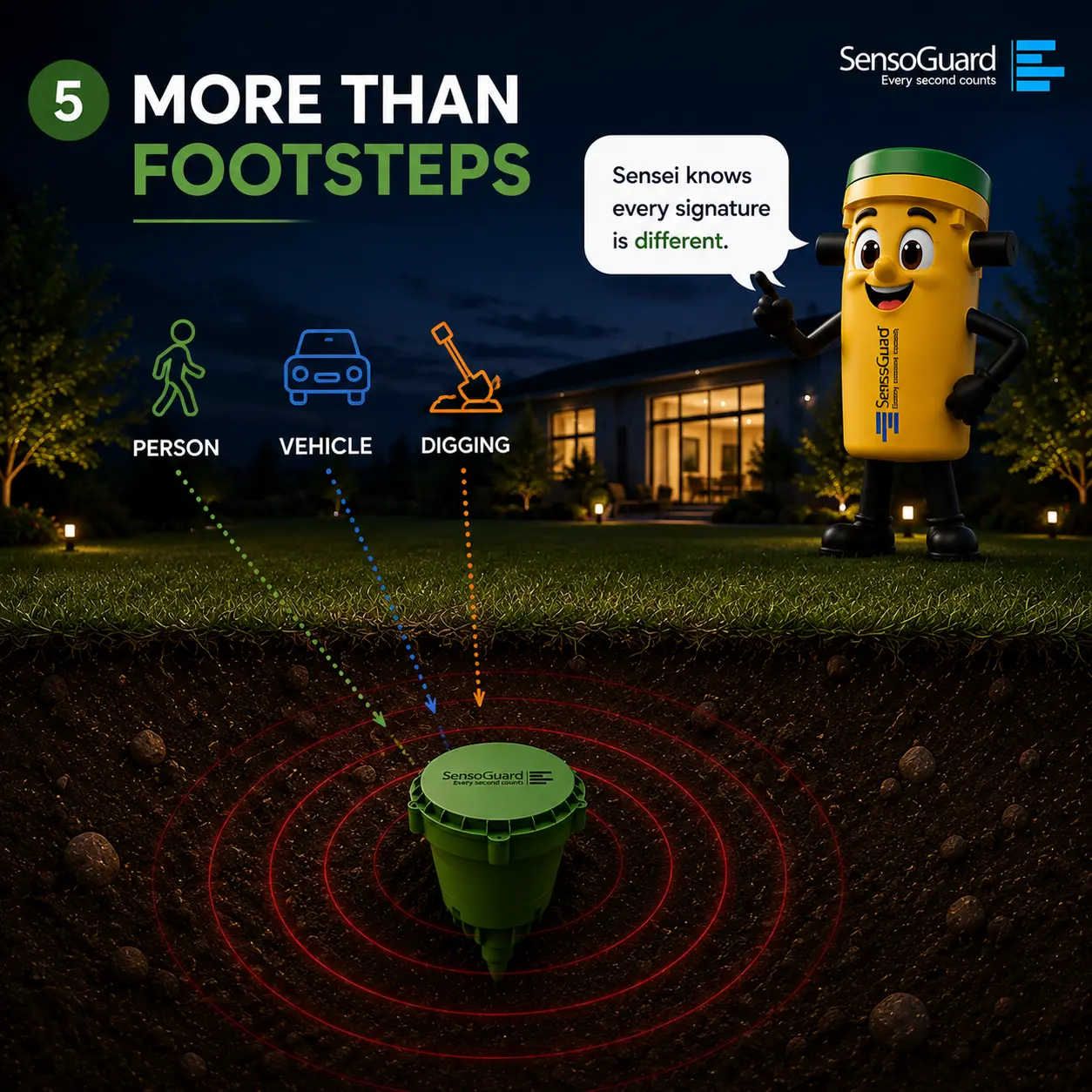
Every signature is different. A person walking, a vehicle rolling past, and digging activity each disturb the ground in a distinct way, and the sensor classifies which one it's picking up rather than just registering that something moved. That's what separates a useful alert from noise: knowing whether to expect a person at the door or a vehicle at the gate. For the technical detail on how that classification actually works, see our deeper explainer on how seismic sensors detect intruders.
Detects Early. Gives You Time.
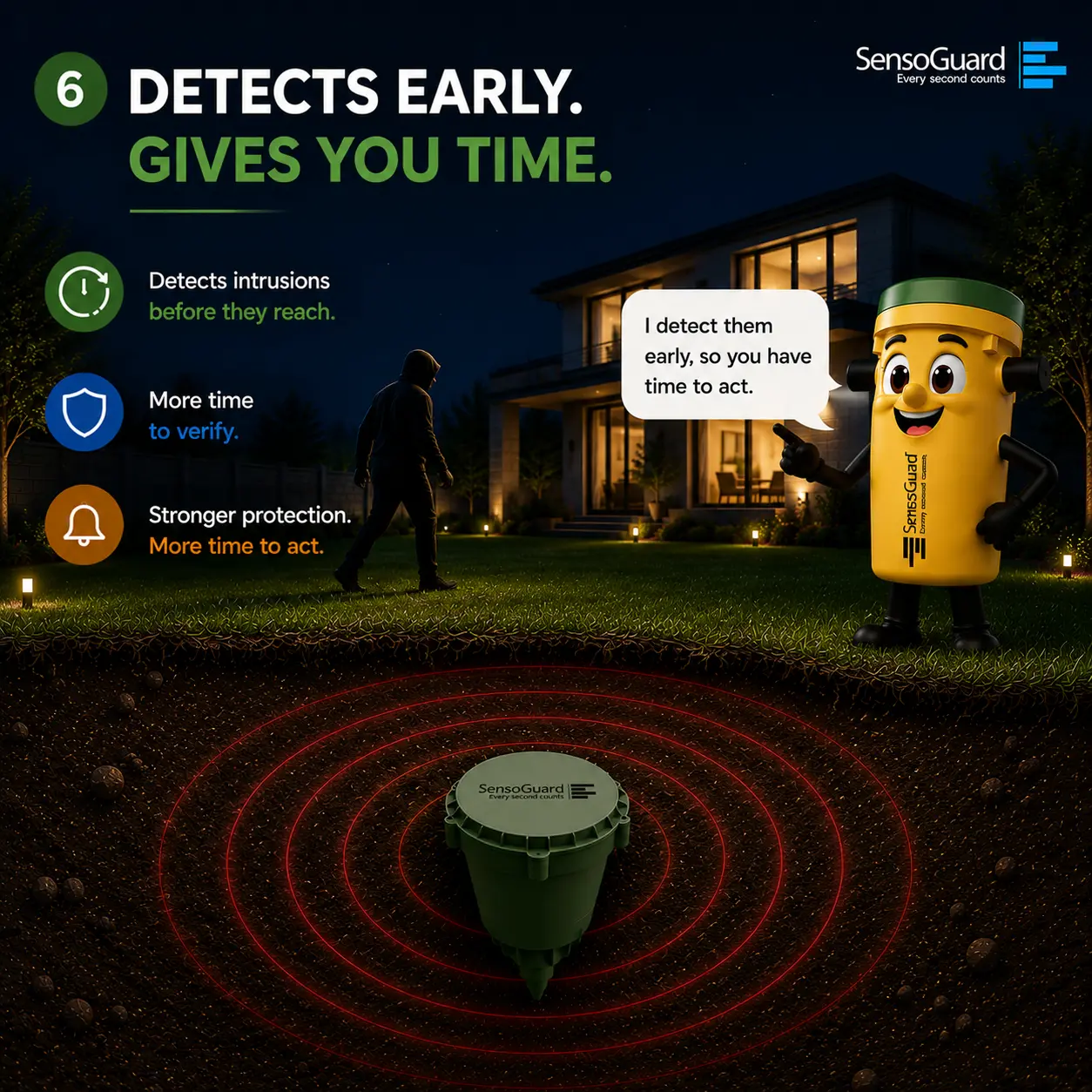
Put together, that's the whole point of underground detection: it catches intrusions before they reach you, gives you more time to verify what's actually happening, and backs that up with stronger protection because there's more time to act. Early detection isn't just a feature, it's what turns a security system from a record of what already happened into a chance to prevent it.
Frequently Asked Questions
What makes underground detection invisible?
The sensor itself is buried, so there's no visible device on the property for an intruder to spot, study, or avoid. Coverage extends 360 degrees around the buried unit, and the housing is tamper-proof and built for all-weather, all-terrain operation.
How early does underground detection warn you?
Every footstep and every vehicle creates a detectable ground vibration, so Seismic Shield registers movement while it's still crossing the yard, long before an intruder is visible or reaches the house, giving you critical seconds to verify and respond.
Does underground detection work without a clear line of sight?
Yes. Because detection happens through the ground rather than through the air, dense foliage, walls, fences, and darkness don't block it the way they block a camera. It works the same day or night, rain or shine.
Can it tell the difference between a person, a vehicle, and digging?
Yes. A person walking, a vehicle moving, and digging activity each create a distinct vibration signature. The sensor classifies which one it's picking up rather than just registering that something moved, which is what keeps false alarms low.