
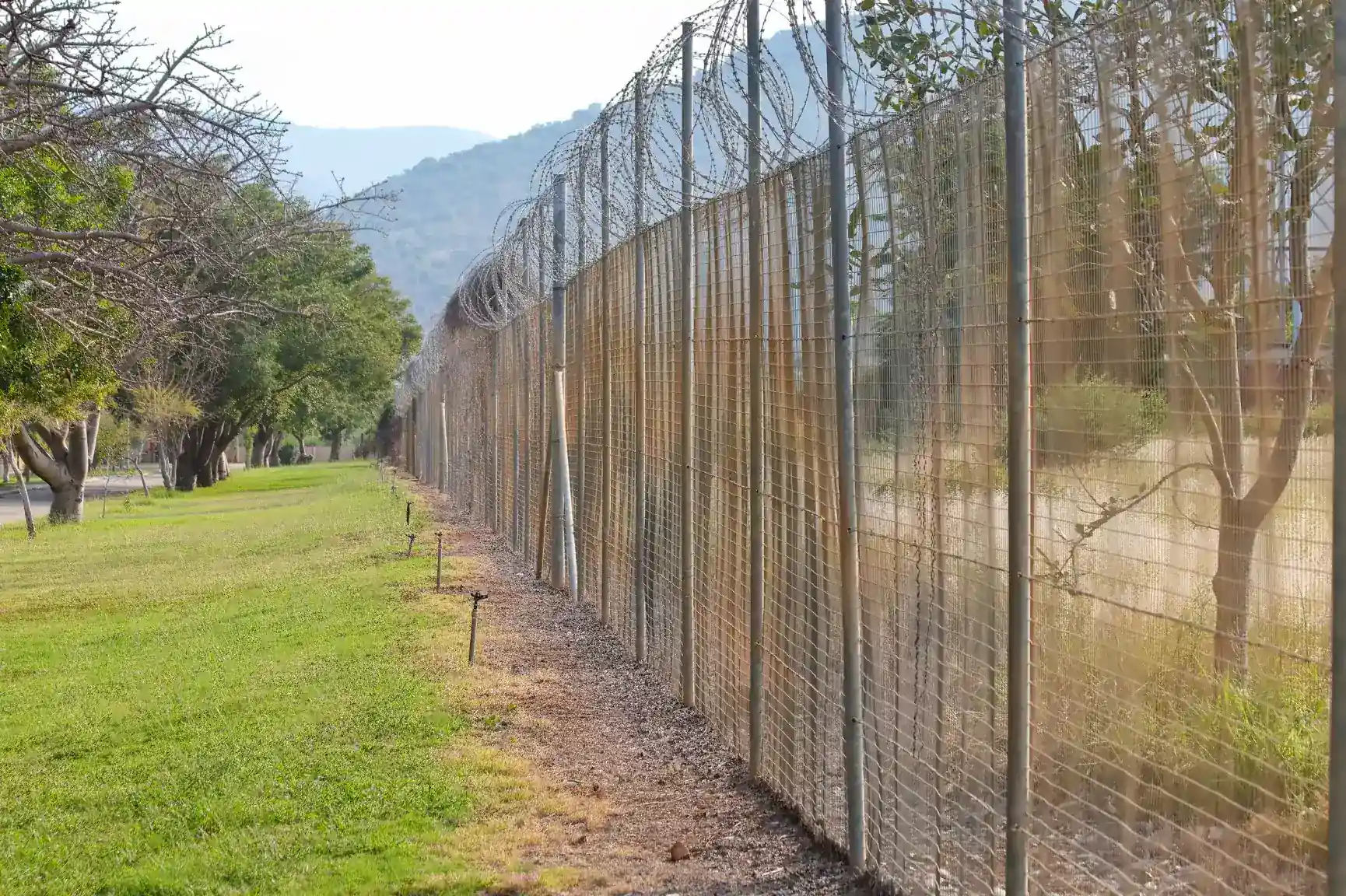
In today's security landscape, three main technologies dominate perimeter protection: underground seismic detection, fence-mounted sensors, and infrared (IR) beams. Each system offers distinct capabilities and limitations, as shown in the comparison below.
What Is a Perimeter Alarm System?
A perimeter alarm system detects intrusion attempts at the boundary of a property, before an intruder reaches a building, yard, or restricted asset. The terms perimeter alarm system, perimeter protection, and perimeter intrusion detection system are often used interchangeably. All three describe the same basic job: sensing a threat at the edge of a site rather than after it's already inside.
Most perimeter alarm systems fall into one of four categories: buried or underground sensors, fence-mounted sensors, free-standing beam systems (infrared or microwave), and camera-based video analytics. Each category reads a different physical signal, ground vibration, fence movement, a broken beam, or a video frame, to detect the same underlying event: someone or something crossing the line. For the formal name for this whole category, see our guide to what a Perimeter Intrusion Detection System (PIDS) is. The comparison below breaks down how the three most common technologies stack up against each other.
Types of Perimeter Detectors
Within each perimeter technology, the actual detector hardware varies by what it's built to sense:
Seismic or Vibration Detectors
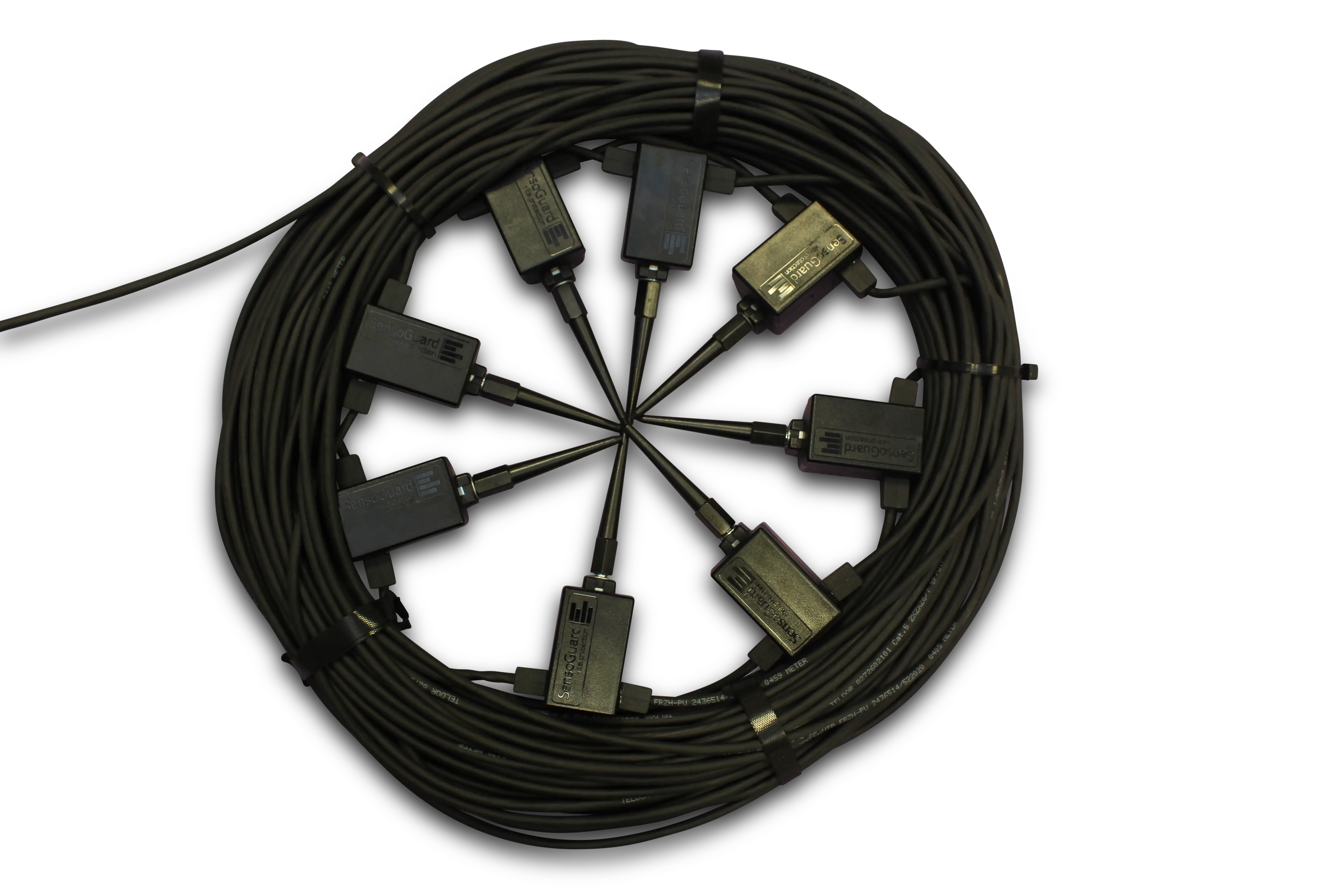
Buried sensors that read ground vibration from footsteps, vehicles, or digging, the approach behind Seismic Shield and InvisiFence Plus. See how seismic sensors work for a full breakdown.
Fence-Mounted Detectors
Sensors attached directly to fence fabric or posts that detect cutting, climbing, or vibration. These only protect the fence line itself.
Infrared and Microwave Beam Detectors
Free-standing units that trigger when a beam between a transmitter and receiver is broken. They need a clear, straight line of sight to work.
Video Motion Detectors
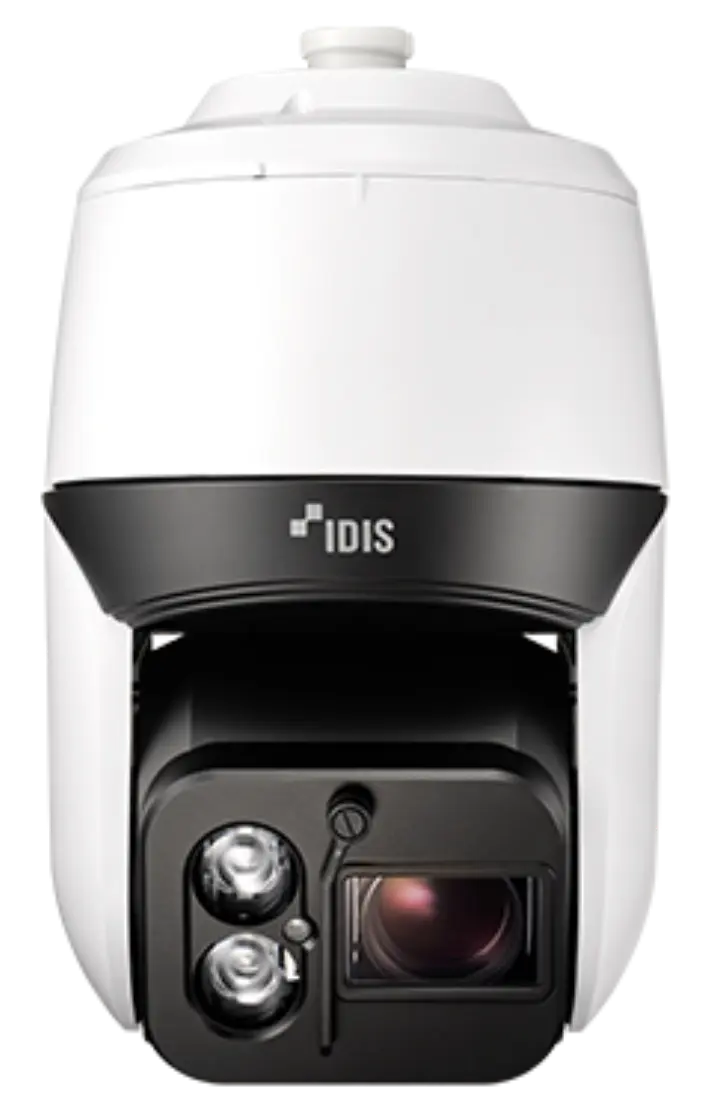
Camera-based systems that use motion or AI analytics to flag movement in a defined zone. On their own they need a clear view of the whole perimeter; paired with a buried sensor that cues the camera to the exact detection point, they become a verification layer instead of a stand-alone detector.
Outdoor perimeter alarm systems have to handle weather, temperature swings, wildlife, and vegetation without generating constant false alarms. This is where buried detectors have a structural advantage: they aren't exposed to wind, rain, or direct sunlight the way fence-mounted or beam-based detectors are.
| Criteria | Underground Seismic Detection | Fence-Mounted Sensors | IR Beams | Video / CCTV Analytics |
|---|---|---|---|---|
| Visibility to intruders | Fully concealed, no visible hardware | Visible on the fence line | Visible posts and beam path | Visible cameras and poles |
| Requires an existing fence | No | Yes | No, but needs clear line of sight | No, but needs line of sight to the camera |
| Weather resistance | Unaffected by rain, wind, or fog | Sensitive to wind-driven fence vibration | Degraded by fog, heavy rain, or snow | Degraded at night, in fog, or in direct glare |
| False alarm sources | Minimal, filtered by adaptive algorithms | Wind, animals, debris hitting the fence | Birds, foliage, dust, and beam misalignment | Wildlife, vegetation movement, shadows, lighting changes |
| Terrain adaptability | Works across open ground, slopes, and vegetation | Limited to the fence line itself | Requires straight, unobstructed sightlines | Limited by each camera's field of view |
| Defeat resistance | No wires to cut or panels to bypass | Can be bridged or climbed between sensors | Can potentially be crawled under or jumped over | Detection point is visible at the lens |
| Maintenance | Low, buried and self-contained | Moderate, tied to fence condition | Moderate, requires beam alignment checks | Higher: regular lens cleaning, cabling, and pole upkeep |
| Typical camera/sensor spacing | N/A — continuous zone, not point sensors | N/A — continuous along the fence | Per straight segment | A fixed camera every 30–40m for continuous coverage |
That last row is where the cost gap really opens up. A standalone video system needs a fixed camera roughly every 30 to 40 meters to avoid blind spots, every one of them, with its own pole, power, and network link, which is why camera-only perimeters get expensive fast on anything longer than a short fence line. Pairing a buried sensor with a single PTZ camera that's cued to the exact detection point removes that density requirement entirely; see the hidden cost of CCTV perimeter security for the full cost breakdown.
For sites where concealment, all-weather reliability, and resistance to tampering matter most, underground seismic detection consistently outperforms fence-mounted sensors and IR beams. Fence-mounted sensors remain a reasonable option where a fence already exists and budget is the primary constraint, while IR beams work best as a secondary layer across short, unobstructed spans rather than as a standalone perimeter solution.
Matching the Technology to the Site
The table above covers the technical trade-offs, but the right choice ultimately depends on what kind of site is being protected:

Residential Properties & Estates
Concealment and landscape preservation usually matter most. Seismic Shield's wireless sensors need no trenching and no visible hardware.
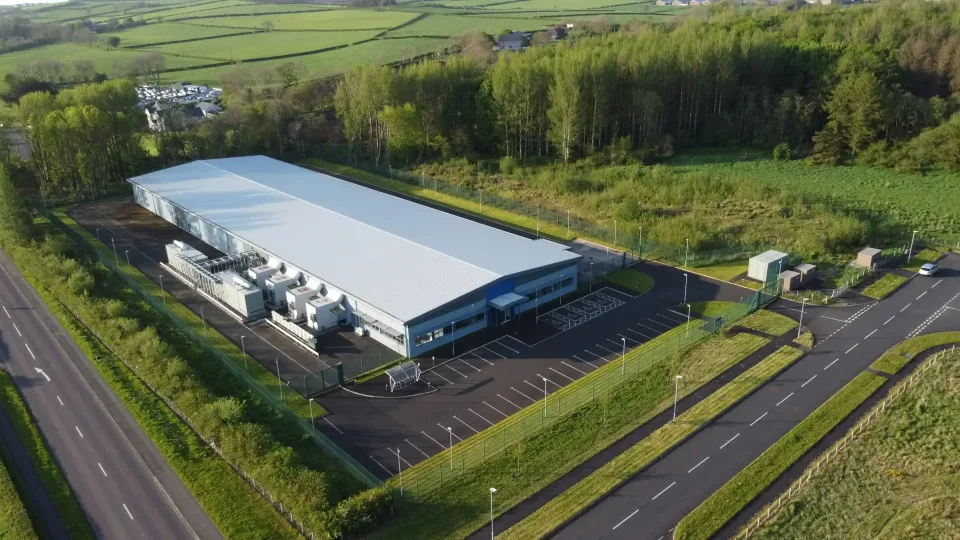
Critical Infrastructure & Government Sites
Seismic Shield Pro adds AI camera verification on top of buried detection to confirm a threat before dispatching a response team.
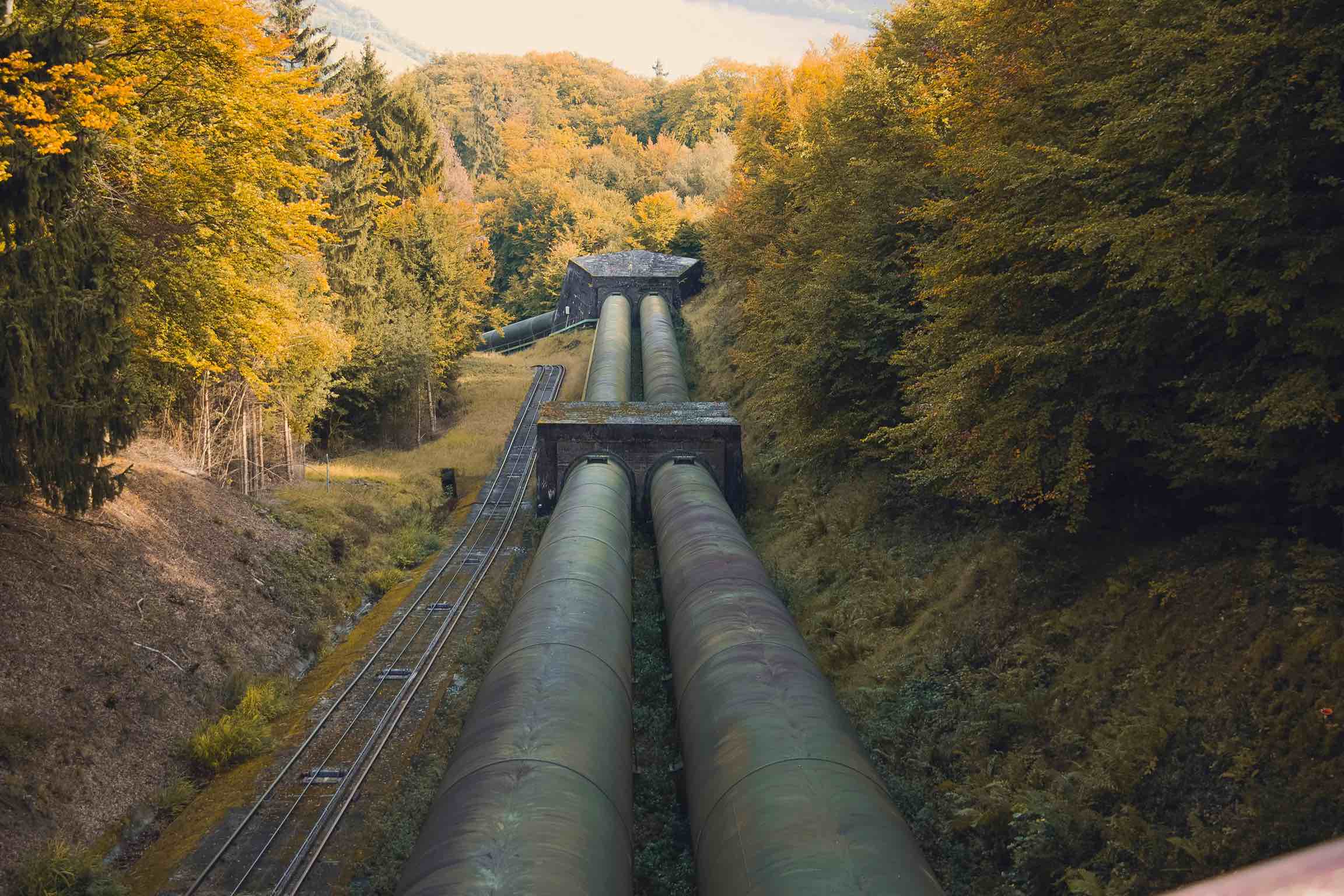
Pipelines & Long Linear Assets
Terrain adaptability matters most here, where a perimeter can run for kilometers across open, uneven, or vegetated ground.
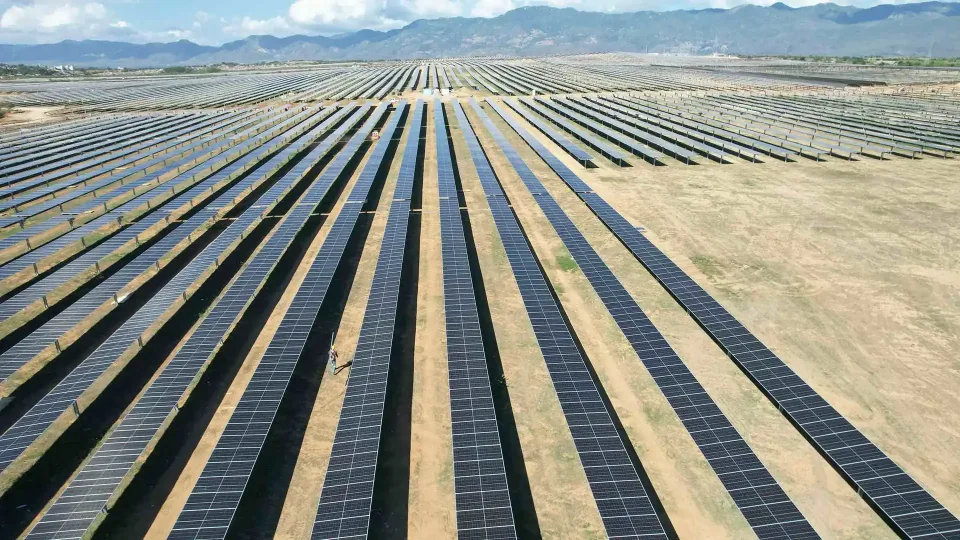
Solar Farms & Renewable Energy Sites
Large, remote perimeters make camera-only coverage expensive to install and maintain; sensor-guided PTZ cameras cut camera count by up to 90%.
Existing Fence & Fixed Budget
Fence-mounted sensors can be a reasonable retrofit, provided the fence itself is in good condition, since detection quality is tied directly to the fence structure.
How Much Do Perimeter Security Systems Cost?
The total cost of a perimeter security system depends more on the site than on the technology alone. Perimeter length, whether trenching is required, and whether a verification layer like cameras is added all drive the final cost more than the base sensor price does.
- Fence-mounted sensors typically carry the lowest incremental cost when a fence already exists in good condition, since the system reuses infrastructure that's already in place.
- Wireless seismic sensors avoid trenching labor entirely, which usually makes installation faster and cheaper than a wired equivalent, at the cost of periodic battery replacement over the sensor's lifespan.
- Wired sensor cable costs more to install upfront because of the trenching involved, but has no batteries to replace and lower long-term maintenance once buried.
- IR and microwave beams scale with the number of straight-line segments needed to cover the site, which can add up quickly on irregular or non-linear perimeters.
- Adding camera verification increases upfront cost but reduces the operational cost of false alarms, since a human only has to review a confirmed, located event instead of every raw sensor trigger.
How Perimeter Security Systems Are Installed
Installation complexity is one of the clearest practical differences between the technologies:
- Buried seismic sensors sit 30 to 50cm underground. A wired sensor cable requires a narrow trench dug along the detection line, backfilled and restored once the cable is buried. Wireless sensors need no trenching at all, each unit is buried individually at its point, which is faster to deploy across a large or irregular site.
- Fence-mounted sensors install quickly where a fence already exists, since the hardware clips or mounts directly to the fence fabric or posts. Installation time is tied to the length and condition of the existing fence line.
- IR and microwave beams require precise alignment between the transmitter and receiver units. Even small misalignments after installation, from ground settling or wind, can degrade detection or increase false alarms, which is why beam systems typically need more careful setup and periodic recalibration than buried sensors.
Frequently Asked Questions
Which perimeter security technology is best for a residential property?
For homes and estates, underground seismic detection is generally the best fit, since it requires no visible hardware and no existing fence, which matters most for residential aesthetics. Seismic Shield is purpose-built for this: wireless sensors need no trenching, and both the wireless and wired options run through the same two-layer verification that keeps false alarms low.
Is a camera-only (CCTV) system enough for perimeter security?
On its own, usually not for a large site. Fixed cameras typically need to be spaced every 30 to 40 meters for continuous coverage, which gets expensive fast on anything beyond a short fence line once poles, power, and network infrastructure are included. Pairing a buried sensor with a PTZ camera cued to the detection point removes that density requirement; see the hidden cost of CCTV perimeter security for the full breakdown.
What's the best perimeter security system for a solar farm?
Large, remote solar sites favor the same combination that works for pipelines and borders: underground seismic detection for continuous early warning, paired with a sensor-guided PTZ camera for verification. That combination can cut the number of cameras needed by up to 90% compared to a fixed-camera layout. See our solar farm protection use case for a deeper look.
Which system scales best for long perimeters like borders or pipelines?
Underground seismic detection scales well across long, open, or uneven terrain since it doesn't depend on a fence line or unobstructed sightlines. Fence-mounted sensors only work where a fence already exists, and IR beams need a clear, straight line of sight, which is hard to maintain over long distances with vegetation, slopes, or curves.
Can I combine more than one perimeter technology on the same site?
Yes, and it's common practice. A typical layered approach uses underground seismic detection for early, concealed warning across the full perimeter, then adds AI-enabled cameras for visual verification once a sensor triggers, rather than relying on a single technology to both detect and confirm a threat.
Do fence-mounted sensors work if I don't already have a fence?
No. Fence-mounted sensors attach to and rely on an existing or purpose-built fence to detect vibration, strain, or cutting. If a site has no fence, or the fence line changes over uneven or vegetated terrain, underground seismic detection or free-standing IR/microwave systems are typically better starting points.
What is a perimeter alarm system?
A perimeter alarm system detects intrusion attempts at the boundary of a property before an intruder reaches a building or asset. The main types are buried seismic sensors, fence-mounted sensors, infrared or microwave beams, and camera-based video analytics.
What's the difference between perimeter detection and perimeter protection?
Perimeter detection refers specifically to sensing an intrusion attempt, the alarm trigger itself. Perimeter protection is the broader term for the full system: detection, verification, and the response it triggers, such as an alert to a guard or a camera cued to the location.
Do outdoor perimeter alarm systems work reliably in bad weather?
It depends on the technology. Fence-mounted and beam-based systems can be triggered by wind, fog, or heavy rain, which drives up false alarms. Buried seismic detection is unaffected by weather since it senses ground vibration rather than surface conditions, making it more reliable outdoors year-round.
How much does a perimeter alarm system cost?
Cost depends more on the site than the technology: perimeter length, whether trenching is needed, and whether camera verification is added all matter more than the base sensor price. Fence-mounted sensors are typically cheapest where a fence already exists; wireless seismic sensors avoid trenching costs; wired sensor cable costs more upfront but needs less long-term maintenance.
How long does it take to install a perimeter security system?
Wireless seismic sensors install fastest since each unit is buried individually with no trenching. A wired sensor cable takes longer due to the trench required along the detection line. Fence-mounted sensors install quickly on an existing fence, while IR and microwave beams need careful alignment between units, which adds setup time.